Garmin HRM-Pro Plus: The Complete Chest Strap for Garmin Users?
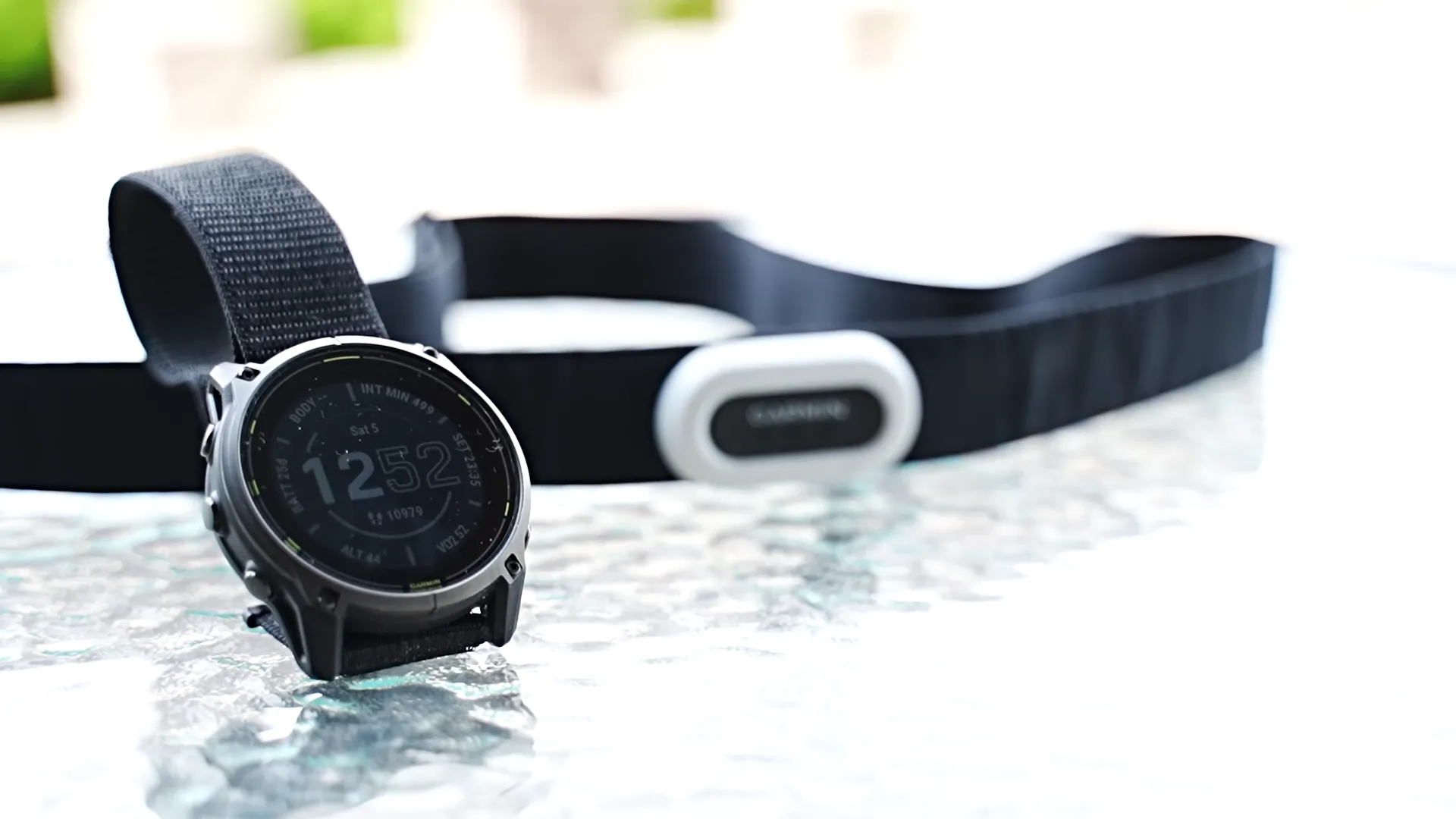
I’ve been using the Garmin HRM-Pro Plus as my primary heart rate monitor for over 10 months now — on the bike, on runs, on the spinning bike, in the gym, and even through a 19-hour endurance race. Paired with my Garmin Enduro 3, this strap has become a permanent part of my training setup, and I feel I have a solid foundation to give an honest review.
Is this the best heart rate strap you can buy in 2026? And is it worth the roughly $130 price tag? Let’s find out.
Why I Bought a Chest Strap
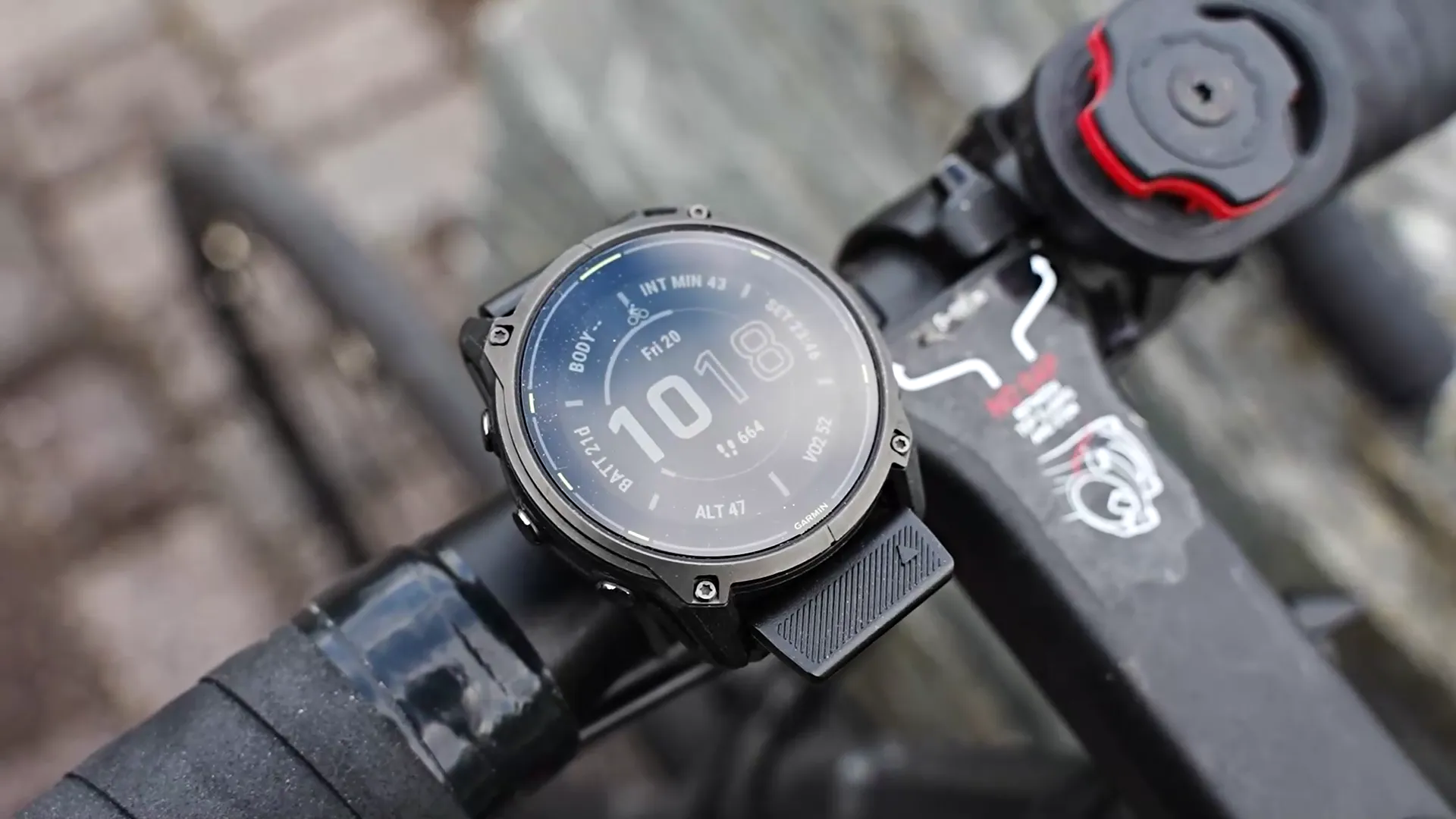
My Garmin Enduro 3 has Garmin’s latest Elevate 5 optical sensor, and for steady zone 2 efforts it does a perfectly fine job. But when I started pushing harder — climbing steep hills on the bike, doing high-intensity intervals on the spinning bike — the wrist sensor consistently lagged behind. It was slow to pick up spikes and slow to register recovery.
When I began training for a long endurance race, I realized I couldn’t keep relying on guesstimates. If the data going into Garmin’s training load algorithms is wrong, everything downstream — recovery time, training status, VO2max estimates — becomes unreliable too. I needed a chest strap, and within the Garmin ecosystem, the HRM-Pro Plus was the obvious choice.
What Is the Garmin HRM-Pro Plus?
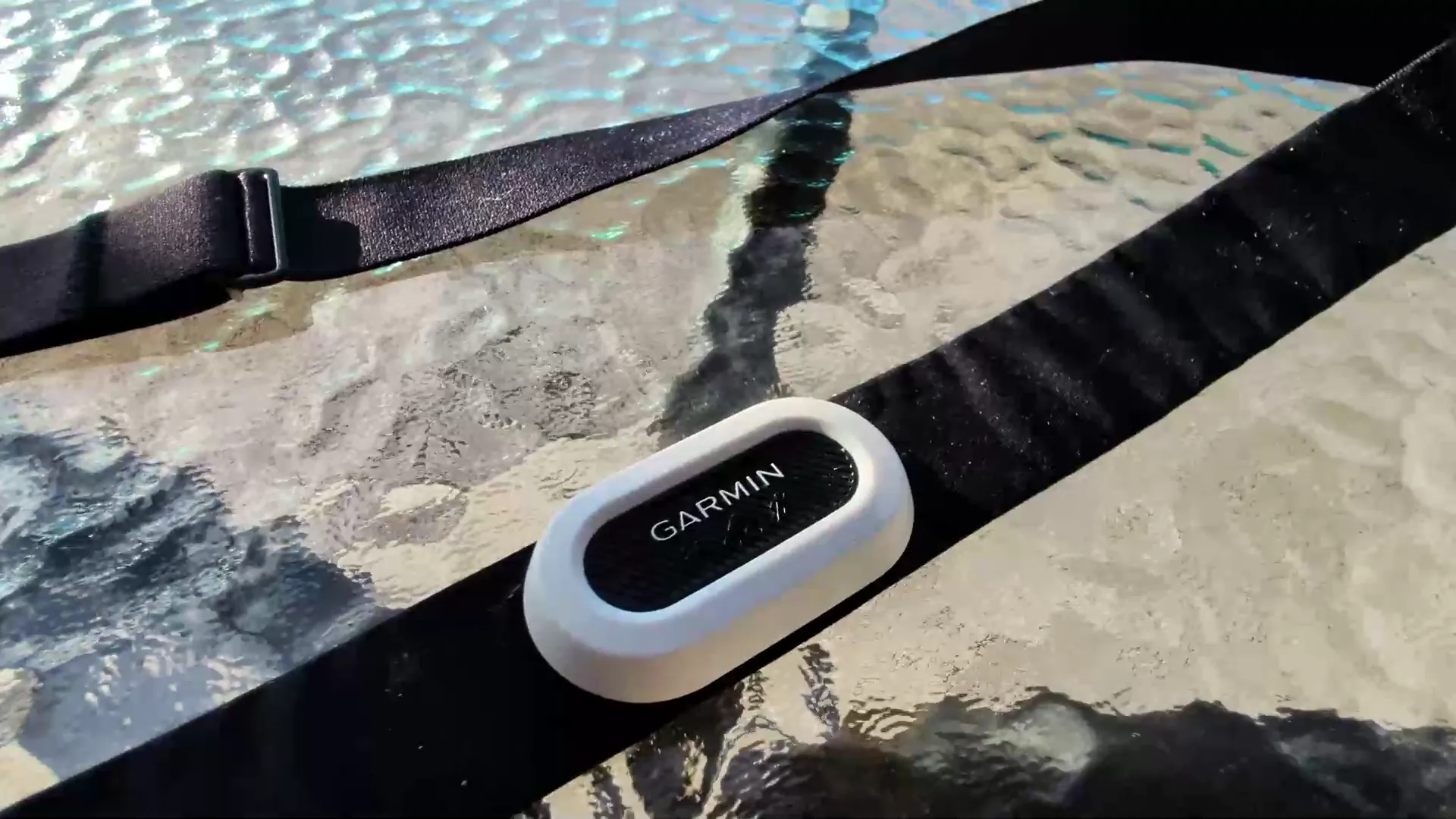
The Garmin HRM-Pro Plus is an ECG-based chest strap that measures heart rate with very high accuracy. It launched in July 2022 as an upgrade to the original HRM-Pro, and remained Garmin’s top-of-the-line heart rate monitor until the newer HRM-600 arrived in 2025 (more on that later).
What sets the HRM-Pro Plus apart from simpler straps is that it does far more than just measure heart rate. It tracks running dynamics, estimates running power, stores heart rate data when your watch loses signal, and can even double as a foot pod for treadmill pace and distance. For those of us living in the Garmin ecosystem, this is the most complete heart rate strap you can get.
Specifications
| Feature | Details |
|---|---|
| Weight | 52 g (module + strap) |
| Battery | CR2032, approx. 1 year (1 hour daily use) |
| Water Rating | 5 ATM (50 meters) |
| Connectivity | ANT+ 2.4 GHz + Bluetooth 5.0 (BLE) |
| Simultaneous BLE Connections | 3 |
| Internal Memory | Up to 18 hours of activity data |
| Sensor Type | ECG-based (electrocardiogram) |
| Price | ~$129.99 / ~1,399 NOK |
Design and Comfort
The first thing you notice when picking up the HRM-Pro Plus is how soft the strap is. It’s made from a silky-smooth fabric that sits comfortably against the skin — which matters a lot when you’re wearing it for hours on a long ride.
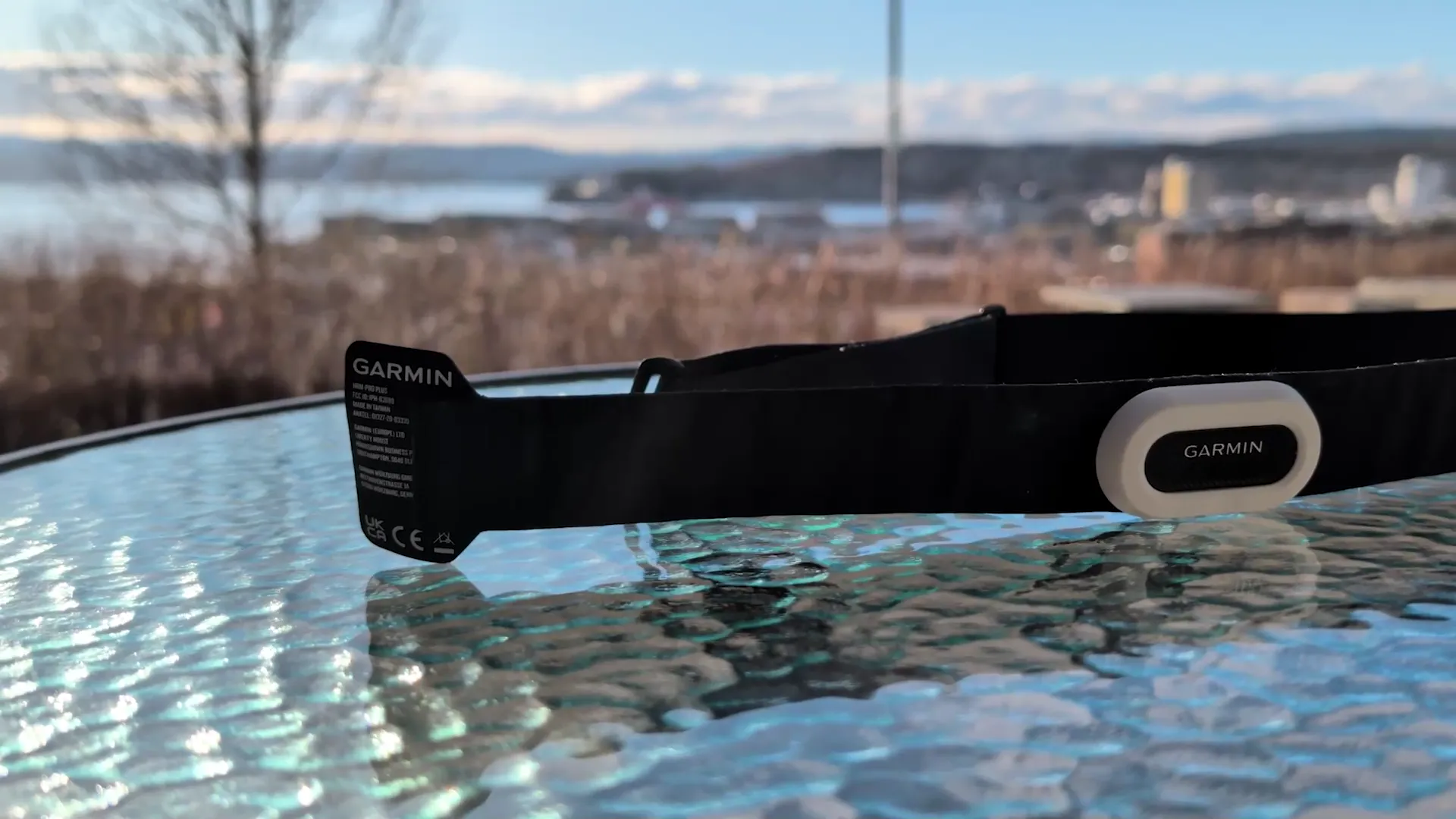
The sensor module itself is white (the old HRM-Pro was yellow), and clicks easily into the strap. It features a smart twist-design battery door that lets you swap the CR2032 battery without any tools. That might sound like a minor detail, but it was actually one of the most important upgrades from the original HRM-Pro, where you needed a screwdriver.
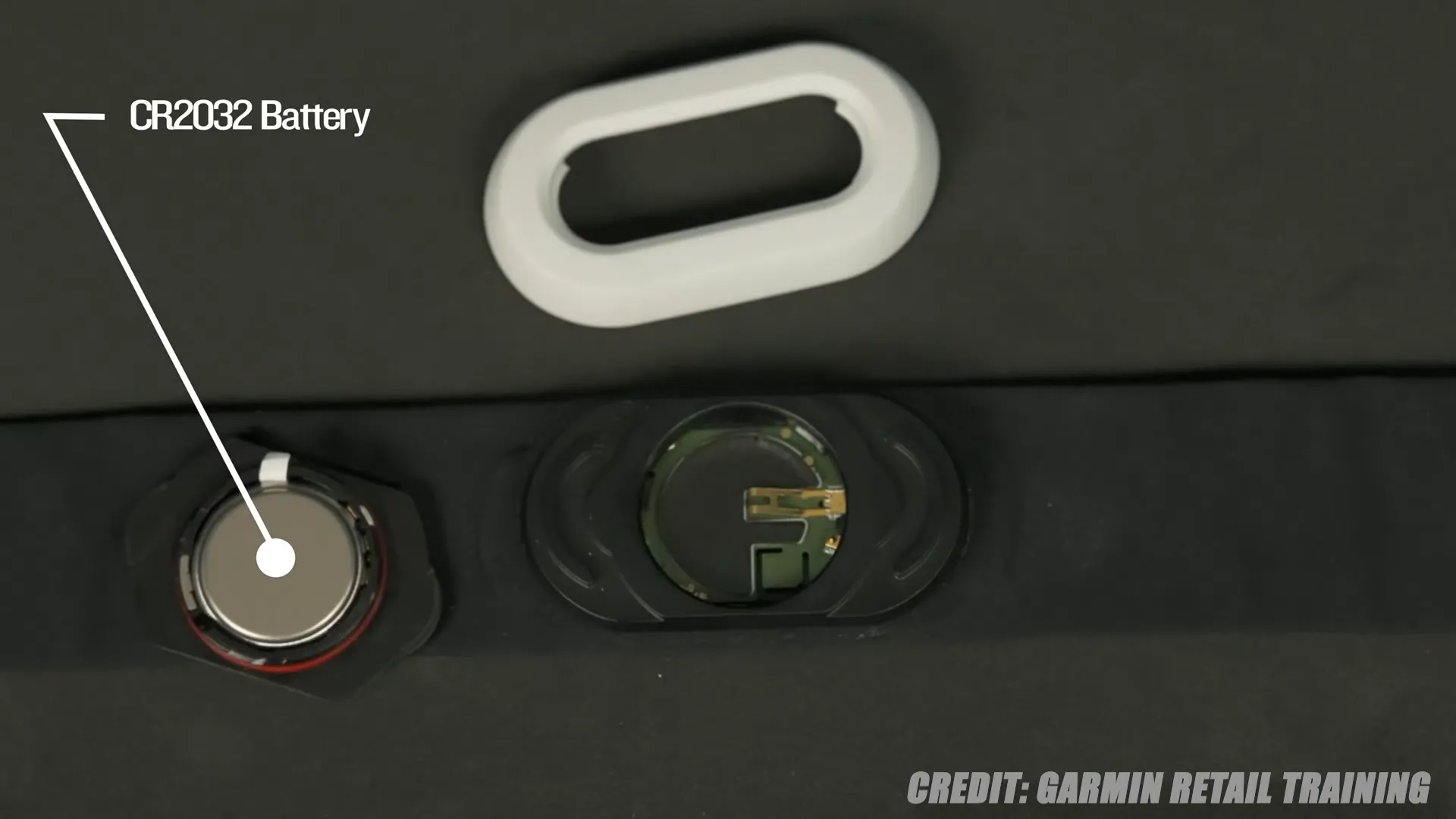
The strap adjusts from 60 cm to 106 cm in circumference, and an included extender expands it to 142 cm. In my experience it stays put without sliding down during training — even on long, sweaty sessions. After 10+ months of regular use, I recently swapped the battery “just to be sure,” though Garmin rates it for a full year.
Why a Chest Strap Beats Wrist-Based HR
Before diving into features, let me explain why a chest strap matters in the first place — because this isn’t just about having “more accurate numbers on the screen.” Bad heart rate data can actually ruin your training plan.
The science is straightforward: Your wrist sensor uses light (photoplethysmography) to detect blood flow changes under the skin. It works reasonably well at rest and during steady efforts, but it struggles with motion artifacts, cold skin, dark tattoos, and anything that disrupts the light path. A chest strap uses ECG technology — it captures the electrical signal from every single heartbeat, just like a medical-grade monitor.
Here’s where it matters in practice:
- Intervals and HIIT: During high-intensity intervals, the wrist sensor lags behind. It misses peak heart rate on the way up and is slow to lock onto recovery on the way down. I’ve seen differences of 15 beats or more during hard efforts.
- Cycling on rough roads: Vibration from gravel and bumpy terrain breaks skin contact on the wrist, causing dropouts and erratic readings.
- Strength training: Gripping a barbell flexes the forearm muscles directly under the optical sensor, creating noise that throws off the readings.
The real problem? If your wrist sensor is lagging 15 beats during intervals, your watch logs that session as tempo when you were actually pushing VO2max. That means wrong training load, wrong recovery time, and potentially following a plan based on data that doesn’t reflect what you actually did. A chest strap eliminates all of that.
Features
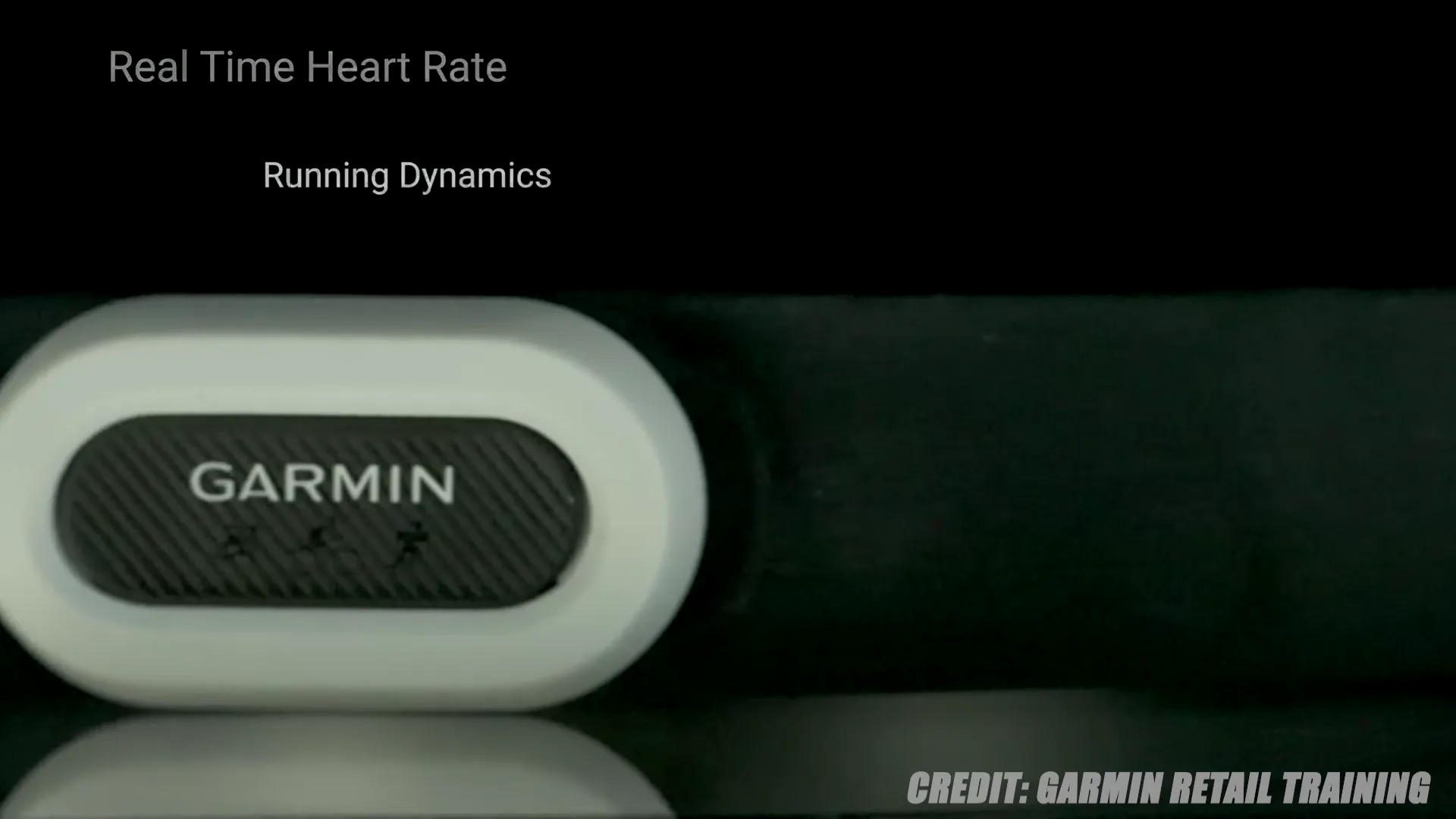
Running Dynamics
For runners, this is arguably the most compelling feature. The HRM-Pro Plus has a built-in accelerometer that measures your upper body movement and calculates six running metrics:
- Ground Contact Time (GCT) — How long your foot stays on the ground per step, measured in milliseconds
- GCT Balance — The distribution between left and right foot
- Vertical Oscillation — How much you bounce vertically while running, in centimeters
- Stride Length — Your step length in meters
- Vertical Ratio — The ratio of vertical oscillation to stride length
- Cadence — Steps per minute
These metrics display directly on compatible Garmin watches during your run, giving you concrete numbers to work with for improving your running form. It’s worth noting that this is a feature you only get with Garmin’s own chest straps — neither the Polar H10 nor other third-party straps deliver these data points to Garmin watches.
Running Power
The HRM-Pro Plus supports Garmin Running Power, which estimates your wattage output during running. Newer Garmin watches like the Forerunner 255/965, Fenix 7/8, and Enduro 3 have native support for this — older models can use a Connect IQ app. As a cyclist, I naturally think in watts, so it’s interesting to see equivalent data for running. On compatible watches, this works without needing a separate stride sensor.
Store and Forward — The Standout Feature
This is the feature that truly sets the HRM-Pro Plus apart, and the one I appreciate the most after my 19-hour endurance race. The strap has 18 hours of internal memory and can store heart rate data locally whenever it loses the connection to your watch.
During my race, the watch lost signal to the strap during pit stops — when I took the watch off to charge, stepped away to refuel, or moved out of range. The strap kept recording the entire time. Once the ANT+ connection was re-established, all the missing data stitched itself back in automatically. No gaps in my heart rate graph for a 19-hour event.
You might wonder: 18 hours of memory, but a 19-hour race? The key is that the buffer only fills when the connection is lost. Since the ANT+ link was stable for the vast majority of the race, the buffer never came close to filling up. It only needed to cover the short disconnection windows. For triathletes or ultra-endurance athletes, this alone can justify the purchase.
Dual Transmission (ANT+ and BLE)
The HRM-Pro Plus broadcasts heart rate data via both ANT+ and Bluetooth 5.0 simultaneously. You can connect it to your watch via ANT+, your phone via Bluetooth, and a training app (like Zwift on an iPad or a smart trainer) via another Bluetooth connection — all at once. With support for up to three simultaneous BLE connections plus unlimited ANT+ connections, you rarely run out of connectivity options. Watch, bike computer, and Zwift all at the same time? No problem.
Indoor Pace and Distance
For treadmill runners, the HRM-Pro Plus doubles as a foot pod. It sends pace and distance data to compatible Garmin watches using the built-in accelerometer to estimate these values from your upper body movements. You can also calibrate manually for better accuracy over time. Practical for winter training indoors.
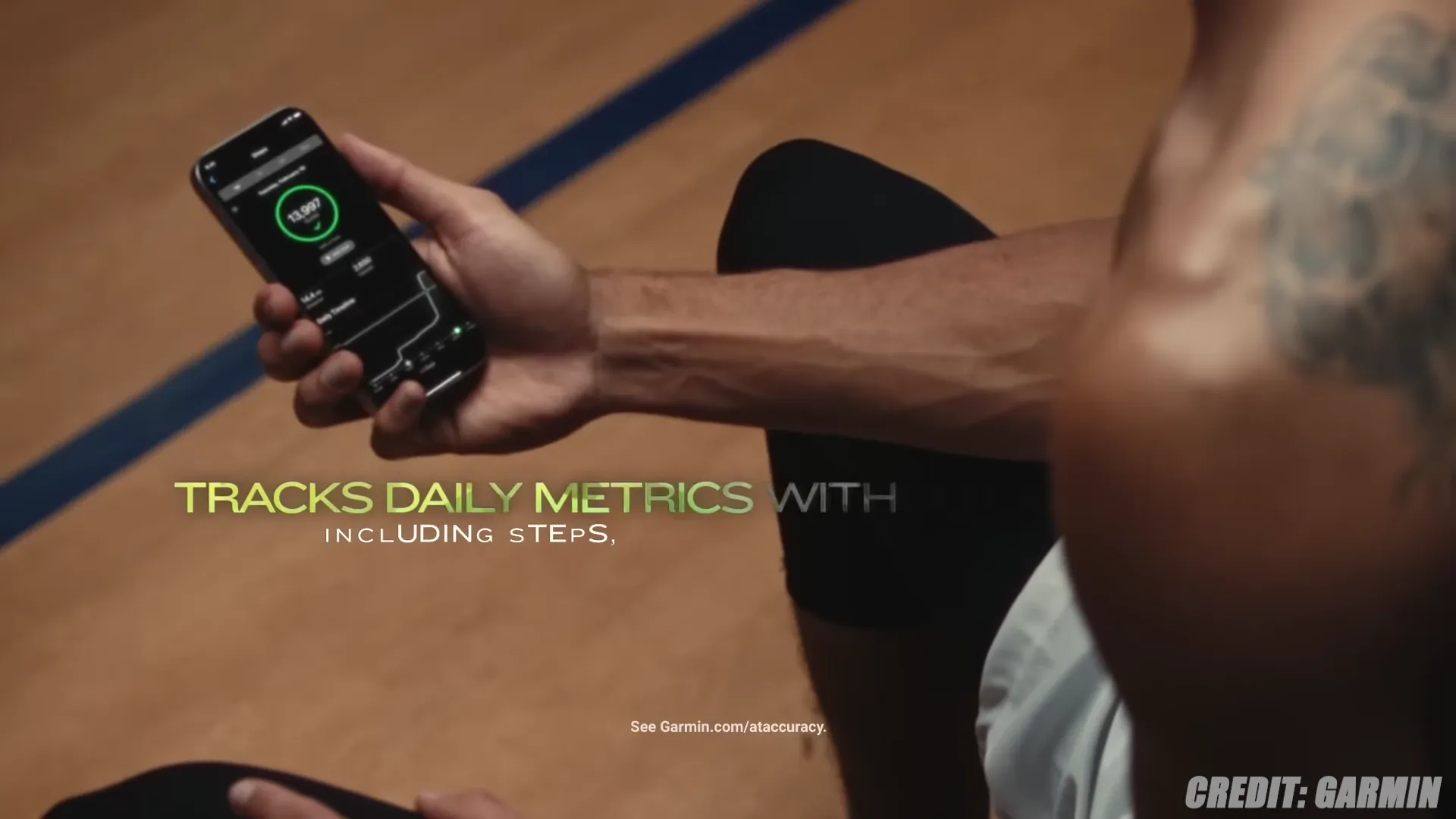
24/7 Activity Tracking via TrueUp
A feature I appreciate: the HRM-Pro Plus tracks steps, calories, and intensity minutes, syncing this to Garmin Connect via TrueUp technology. If you take off your watch for charging or any other reason, the chest strap fills in the gaps in your data. It gives you a more complete health log without having to think about it.
In Use — Real-World Performance
Now to what matters most: how does the strap actually perform in practice?
Cycling
I’ve worn the HRM-Pro Plus on countless rides — from easy gravel road spins to long interval sessions and everything in between. My experience is that the heart rate measurement is extremely stable and accurate. Compared to the optical sensor on the Garmin Enduro 3, the chest strap delivers noticeably better data, especially during high-intensity intervals where the wrist sensor tends to lag behind or produce spikes.

The heart rate data integrates seamlessly with power data from my power meter, giving me a complete picture of training load. On the Garmin watch I see heart rate zones in real time, making it easy to stay within target zones during structured workouts.
Comfort is also excellent over long durations. On rides lasting 3–4 hours I barely notice the strap is there — as long as you moisten the electrodes before putting it on (a tip that applies to all chest straps). The strap has stayed put through rain, wind, and sun on some amazing rides across Norway.
The 19-Hour Endurance Race

This was the ultimate stress test. Nineteen hours of riding, with multiple pit stops where I had to take the watch off for charging. Thanks to the store-and-forward feature, the HRM-Pro Plus kept recording during every disconnection and stitched all the data back together seamlessly. Looking at my heart rate graph afterwards, there are zero gaps. For ultra-distance events, this kind of reliability is invaluable.
Indoor Training
Indoors on the spinning bike, elliptical, and during weightlifting, the HRM-Pro Plus is a true set-and-forget device. Zero dropouts. I connect the strap to both my Garmin Enduro 3 via ANT+ and my training app via Bluetooth. Heart rate data combined with power data from the bike gives precise training control, and this is where the chest strap really proves its worth over an optical wrist sensor — sweat and forearm muscle engagement can confuse wrist sensors, but the chest strap works flawlessly.
Running
Running is where you truly unlock the full potential of the HRM-Pro Plus. In addition to accurate heart rate, you get all the running dynamics data right on your watch. After a few weeks of data, I started seeing clear patterns in ground contact time and vertical oscillation — valuable information for working on running form.
The Running Power feature is also useful, especially for managing intensity on hilly terrain where pace alone can be misleading. All in all, a noticeably richer training experience compared to relying on a wrist-based heart rate monitor alone.
My Biggest Gripe — Washability
Here’s the one thing that genuinely bothers me about the HRM-Pro Plus: you cannot remove the pod from the strap. Unlike the newer HRM-200 and HRM-600, the module is permanently attached, which means you can’t machine wash the strap. You’re limited to hand washing it in the sink.
Garmin recommends washing it after every 7 uses. I honestly don’t have any issues with this routine — for me this works completely fine. But after 10+ months of regular washing and sun drying, the fabric is getting noticeably rougher. It’s not as soft as day one. It still works perfectly, but if you’re planning to use this strap for years, the non-removable pod is a legitimate concern.
HRM-Pro Plus vs the Competition
How does the Garmin HRM-Pro Plus stack up against the most relevant competitors? Here’s an overview:
| Feature | Garmin HRM-Pro Plus | Polar H10 | Wahoo TICKR X |
|---|---|---|---|
| Price (USD) | ~$129.99 | $89.95 | ~$79.99 |
| Price (NOK) | ~1,399 NOK | 849–950 NOK | ~700–900 NOK |
| Water Rating | 5 ATM (50 m) | 3 ATM (30 m) | IPX7 (not for swimming) |
| Battery | CR2032, ~1 year | CR2032, ~400 hours | CR2032, ~500 hours |
| Connectivity | ANT+ + BLE (3 simultaneous) | ANT+ + BLE + GymLink | ANT+ + BLE (3 simultaneous) |
| Running Dynamics | Yes (6 metrics) | No | Partial (cadence, GCT, vert. osc.) |
| Running Power | Yes (native) | No | No |
| Swim HR Storage | Yes (18 hours) | No (real-time only) | No |
| Internal Memory | 18 hours | 440 hours | Limited |
| Garmin Integration | Full | Basic | Basic |
| Weight | 52 g | 60 g | ~48 g |
Polar H10 is the obvious alternative if you don’t use a Garmin watch. It’s cheaper, extremely reliable, and has an impressive 440 hours of internal memory. Comfort is among the best on the market. But it lacks running dynamics and running power — making it less interesting for Garmin users who want all the data.
Wahoo TICKR X is the most affordable option and works well with third-party apps like Zwift, TrainerRoad, and Strava. It has some running dynamics, but lacks full swim support (only IPX7) and has received some reports of reliability issues. For pure cycling and indoor training, it can be a solid budget choice.
My take: if you use a Garmin watch and want to get the most out of your data, the HRM-Pro Plus is the obvious pick. If you’re on a different ecosystem, the Polar H10 is hard to beat on price and quality.
What About the HRM-200 and HRM-600?
Garmin now offers three chest straps in their lineup, and the question of which one to get is fair. Here’s my quick breakdown:
HRM-200 (~$99): This is the budget option. It gives you accurate heart rate for cycling and gym work, and the pod is removable so you can machine wash the strap. However, it has no internal memory and no running dynamics. If all you need is reliable heart rate data, this is your best value pick.

HRM-600 (~$160): This is the luxury option and Garmin’s newest chest strap. Key upgrades include:
- Rechargeable battery — No more CR2032 coins. Charges via USB with approximately 2 months of battery life
- Removable pod — The module clicks off the strap, so you can wash the strap separately
- Machine-washable strap — Finally! No more careful hand-washing in the sink
- App-based controls — Configure settings from the Garmin Connect app
- Step speed loss tracking — Monitors stride efficiency, though the Garmin Enduro 3 and Fenix 8 also gained this feature via a software update
My advice: Just need heart rate? Get the HRM-200. Want the newest running features, rechargeable battery, and a machine-washable strap? Get the HRM-600. The HRM-Pro Plus sits in the middle — still a fantastic strap, especially if you find it on sale or already own one and have no reason to upgrade.
Pros and Cons
Pros
- Highly accurate ECG-based heart rate measurement
- Complete running dynamics with 6 metrics + running power
- Dual transmission — ANT+ and Bluetooth simultaneously (up to 3 BLE)
- Store-and-forward saves HR data when watch connection drops (18-hour buffer)
- Long battery life — approximately 1 year with CR2032
- Tool-free battery swap (twist design on the Plus model)
- Comfortable, soft strap
- 5 ATM water rating — safe for all training and weather
- 24/7 activity tracking via TrueUp
- Doubles as foot pod for treadmill pace and distance
- Zero dropouts across indoor spinning, elliptical, weightlifting, and running
Cons
- Premium price — ~$130 is a lot for a heart rate strap
- Many top features require a Garmin watch — limited value for other brands
- Pod is permanently attached to the strap — can’t replace just the strap
- Hand wash only (not machine-washable)
- Strap fabric gets rougher after months of washing and sun drying
- Successor HRM-600 already available with notable improvements
Conclusion and Rating
The Garmin HRM-Pro Plus is simply the best heart rate strap you can buy if you use a Garmin watch. The heart rate accuracy is impeccable, the running dynamics provide valuable data, and the seamless integration with the Garmin ecosystem means everything just works — no configuration or fiddling required.
After 10 months of daily use across cycling, running, spinning, gym sessions, and a 19-hour endurance race, the strap has delivered flawlessly. The store-and-forward feature alone saved my race data, and the zero-dropout reliability across every activity type makes this a genuine set-and-forget device.
The only reason not to buy the HRM-Pro Plus right now is if you’d rather invest in the HRM-600 (which addresses the washability issue and adds a rechargeable battery), or if you don’t use a Garmin watch (in which case the Polar H10 is a better buy). For everyone else training with a Garmin watch who wants the best data from their workouts — this is the strap to get.
My Rating: 9/10
An outstanding heart rate strap for Garmin users. I’m only docking a point for the non-removable pod (which prevents machine washing and causes strap wear over time) and the fact that the successor HRM-600 has already launched with meaningful improvements. For anyone training seriously with a Garmin watch — this is the strap to go for.