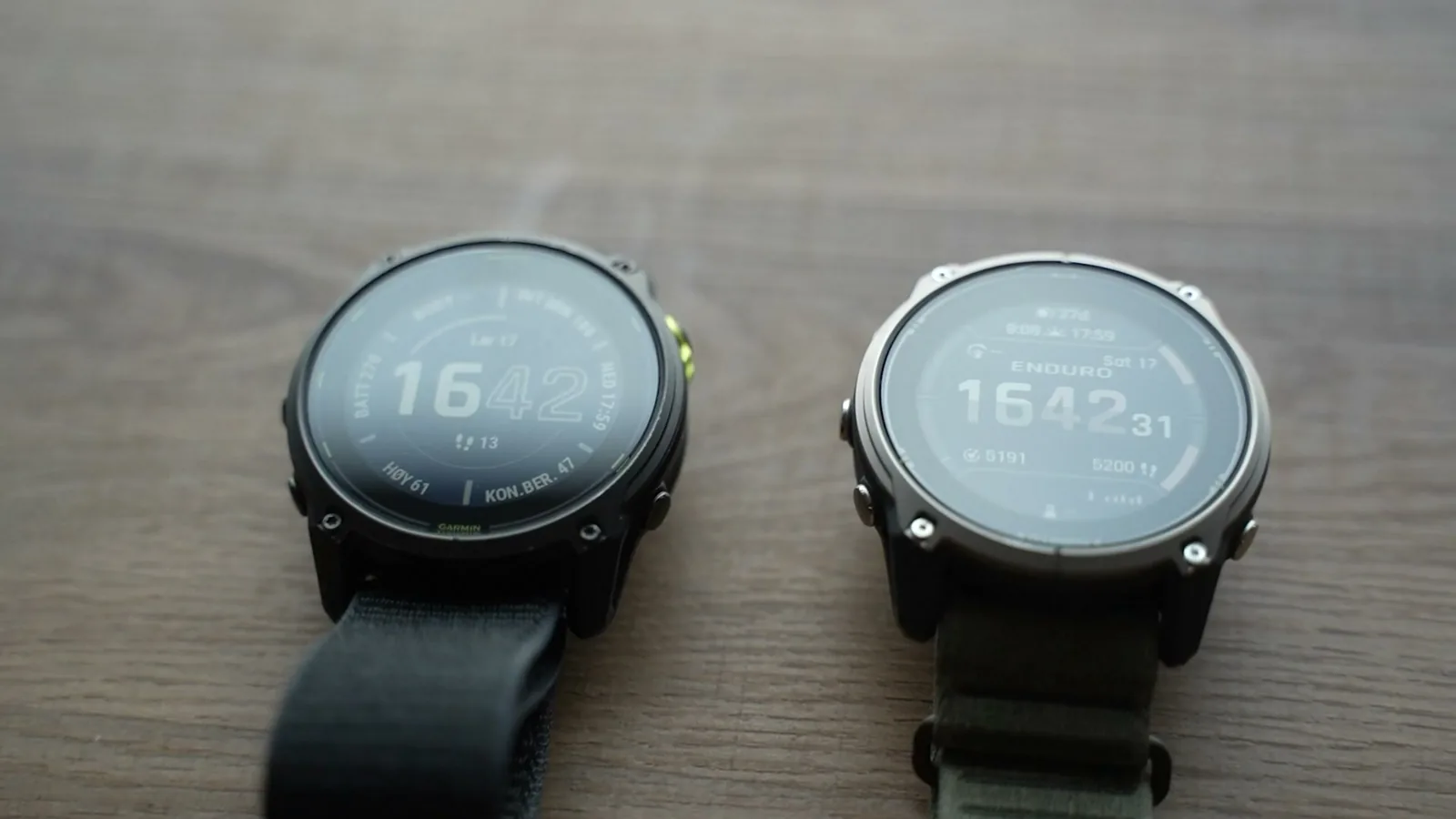
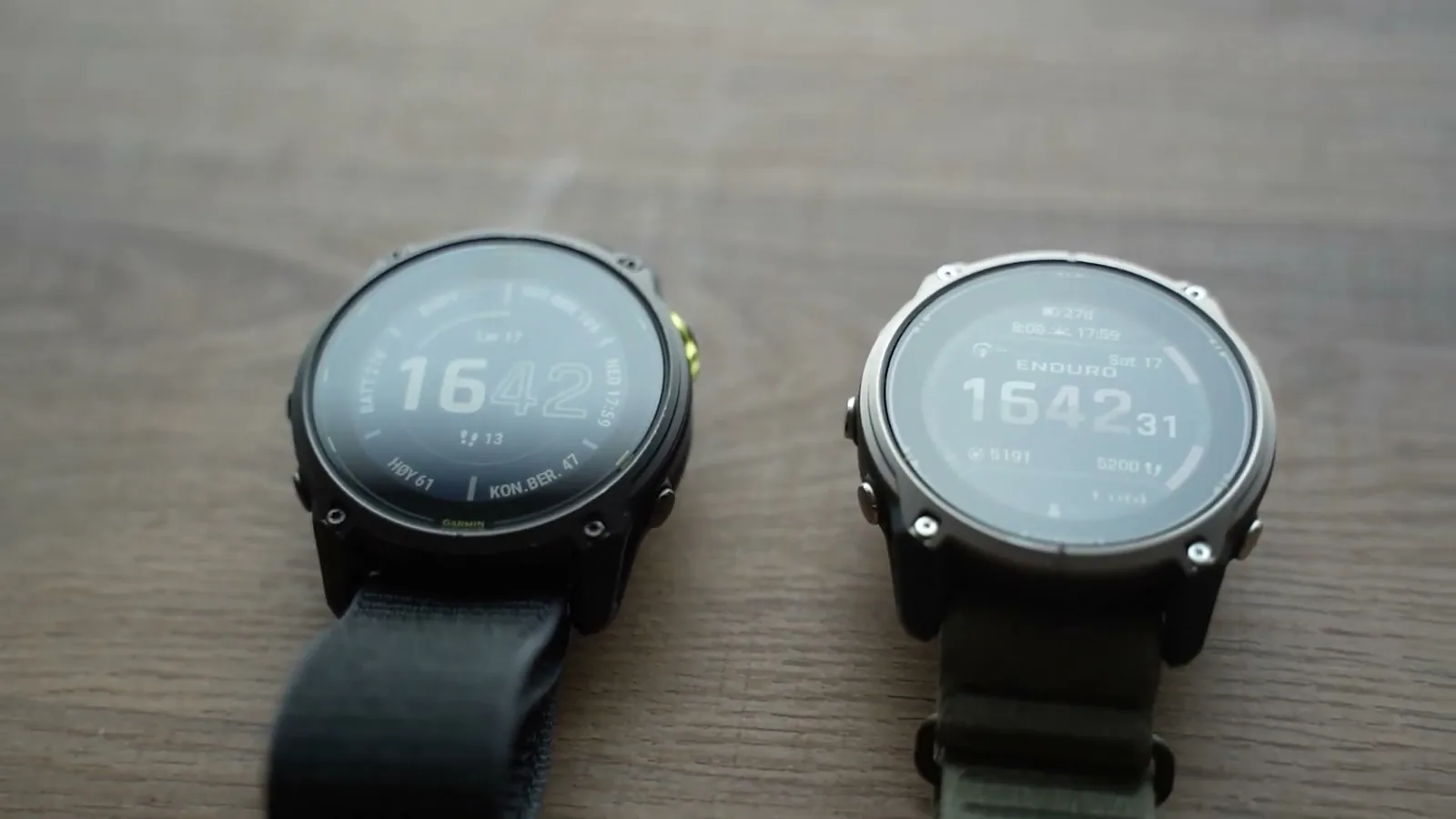
This is the Garmin Enduro 4, and next to it is the Garmin Enduro 3, and they are seemingly very similar devices. When I was writing my video about the features I expected from the Enduro 4, I was thinking that Garmin had actually peaked with the Enduro 3, and looking at what we got, it seems like Garmin has settled on that same conclusion.
I’ve been using the Enduro 4 for a week, and these are my initial impressions. I think I have a pretty good idea of how it compares to the Enduro 3, and I think Garmin has a pretty good idea of who the Enduro 4 is for. Let’s dig in.
What is actually different from the Enduro 3?
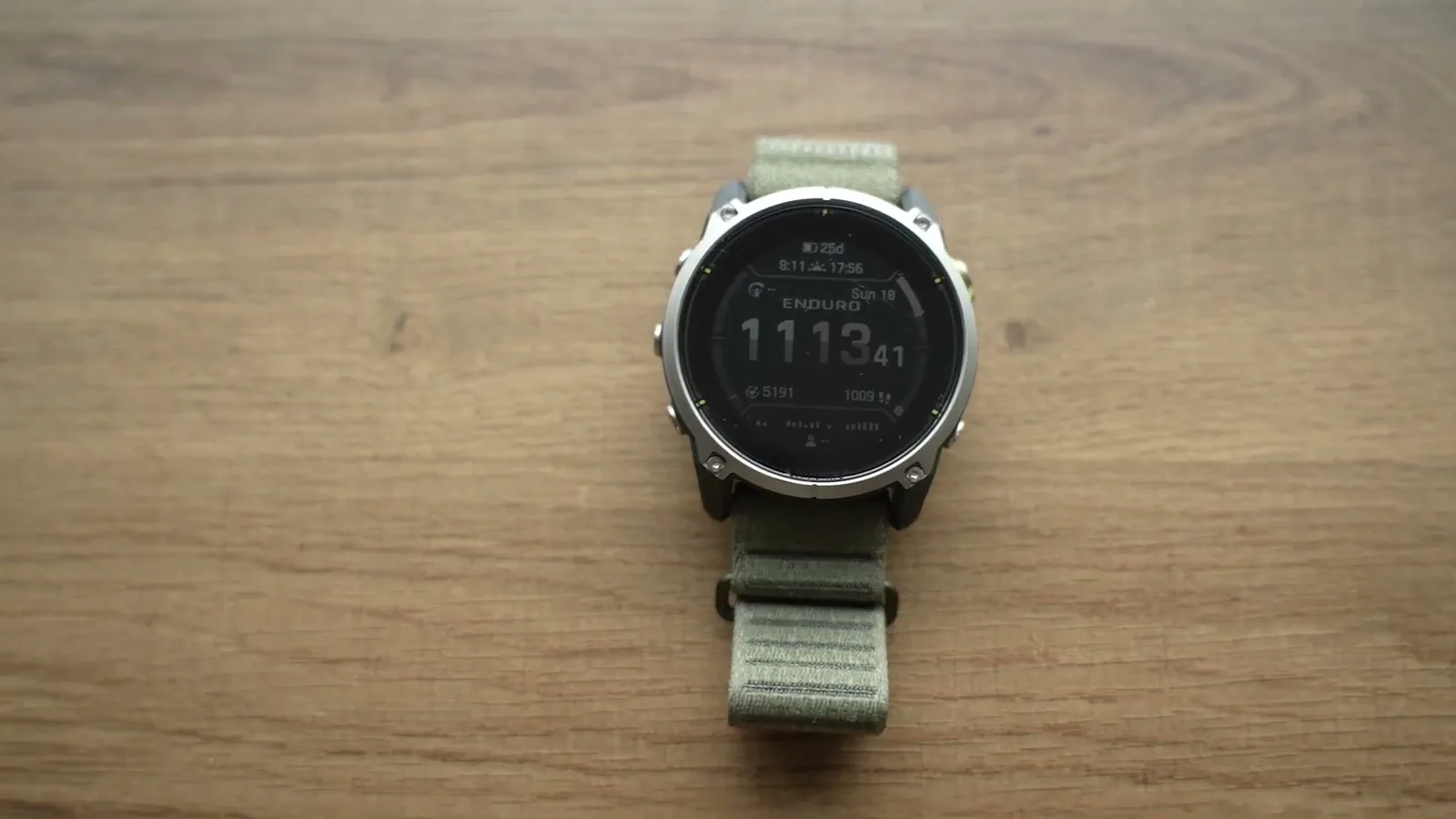
The two watches launched at the same price. They have the same plastic case with a titanium bezel, the same screen size, the same sapphire glass and the same sensors. The differences you can see are the weight, the band and the color, and inside there is a new processor and more RAM. Garmin says map panning is now 30% faster, and there are some new features that the Enduro 4 will get and the Enduro 3 won’t.
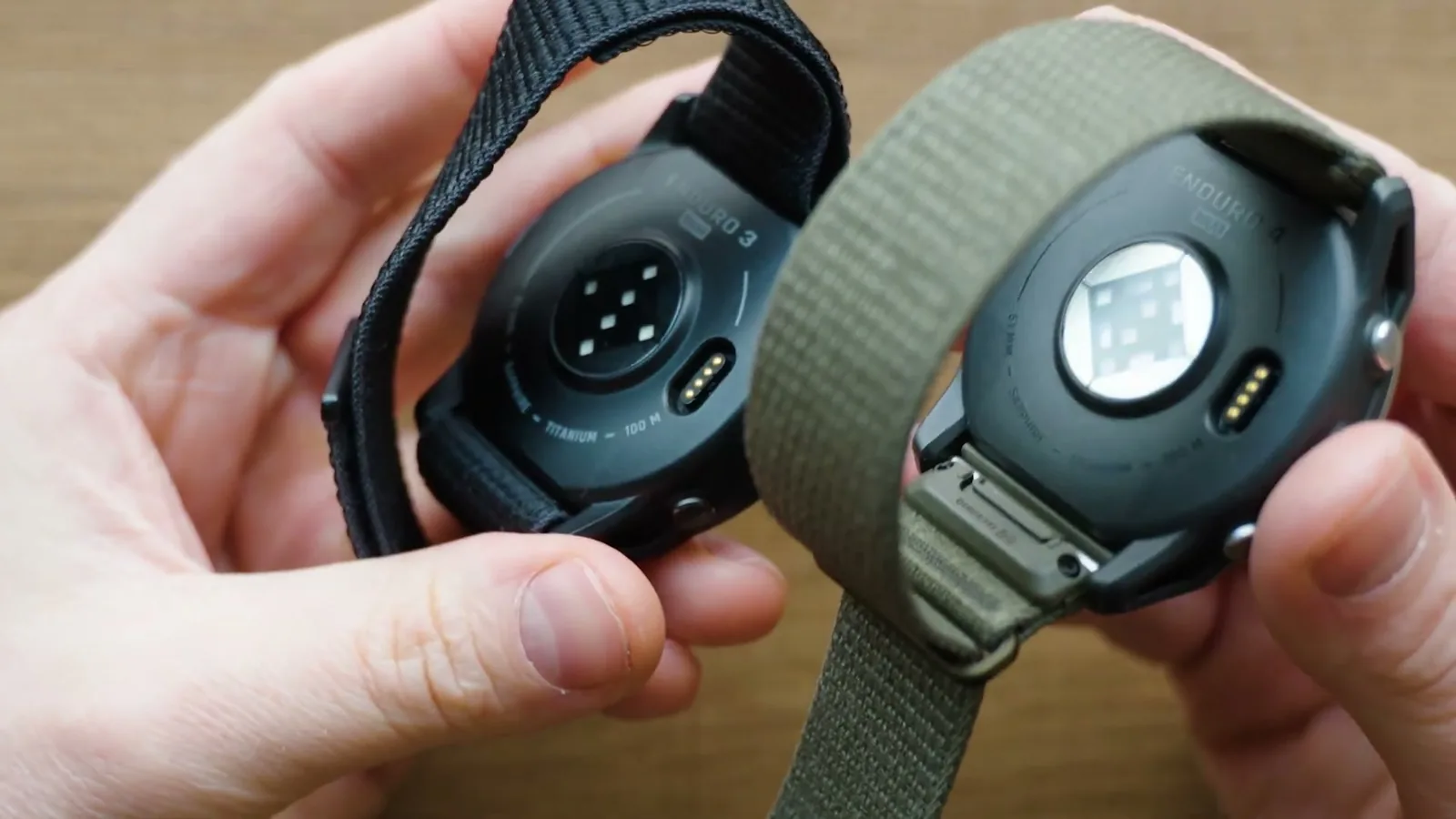
The bezel now has a natural titanium color, where the Enduro 3 has a dark gray one that you could also call black, and the buttons follow the same scheme. The green accents on the front are a lot less pronounced on the Enduro 4, which I think is always a positive. Garmin has kept the green button on the side, although it is more muted than the glowing lime green you see on the Enduro 3. The heart rate sensor is the same, and the charging port is in the same place.
Build quality and display
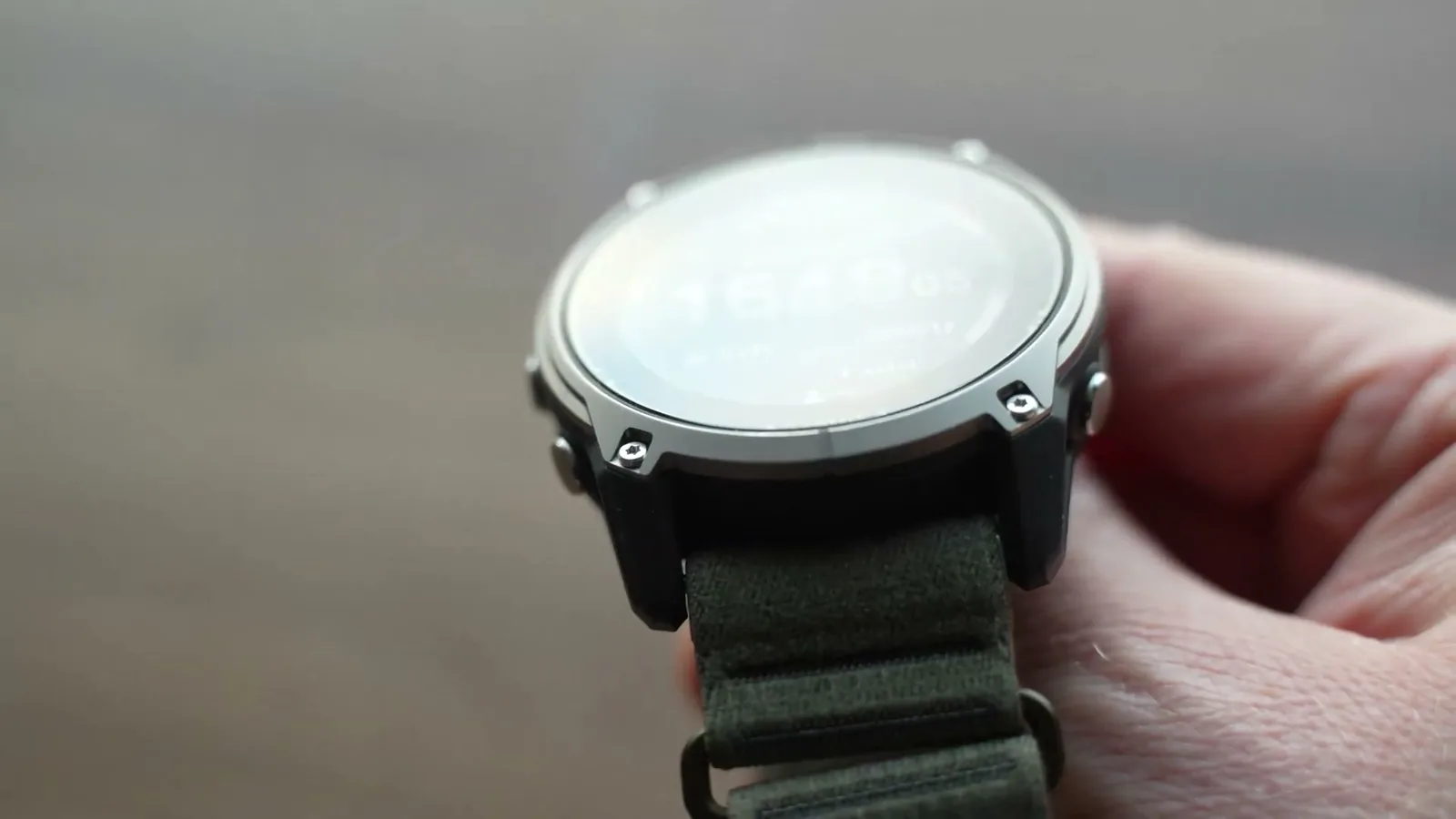
In terms of build quality it is still the same device with a plastic case. I find that really nice though, because it keeps my wrist warmer during winter. My Enduro 3 is full of scratches around its bezel, so I’m expecting the same on the Enduro 4, and I think it is really nice to have that titanium bezel around the screen to take them.
Both devices have a sapphire screen, which I think matters the most when it comes to protecting the display. There are zero scratches on the screen of my Enduro 3, and I expect nothing else from the Enduro 4.
I am pretty happy that Garmin went the safe route here and didn’t add AMOLED, a speaker or a microphone. Those features would probably have compromised the battery life by taking up more space internally.
Battery life and solar
Comparing the two, the screens seem identical and the solar panel is still the same, and on paper the battery life is about the same too. I did expect to see even better solar performance on the Enduro 4. But the numbers on both watches are already insane compared to most other smartwatches out there. With up to 90 days in smartwatch mode under favorable solar conditions, this is probably the best battery life you can get in a smartwatch.
If you are coming from an Apple Watch, and that is everything you know in terms of smartwatches, these watches can feel like a bit of a weird trip back in time, because they use memory in pixel displays, which feels like older tech. It is the one I prefer though, because I do a lot of hiking and outdoor activities and I want that extended battery life. I have written up the five settings I changed to get better battery life on the Enduro 4 separately.
The new ComfortFit band
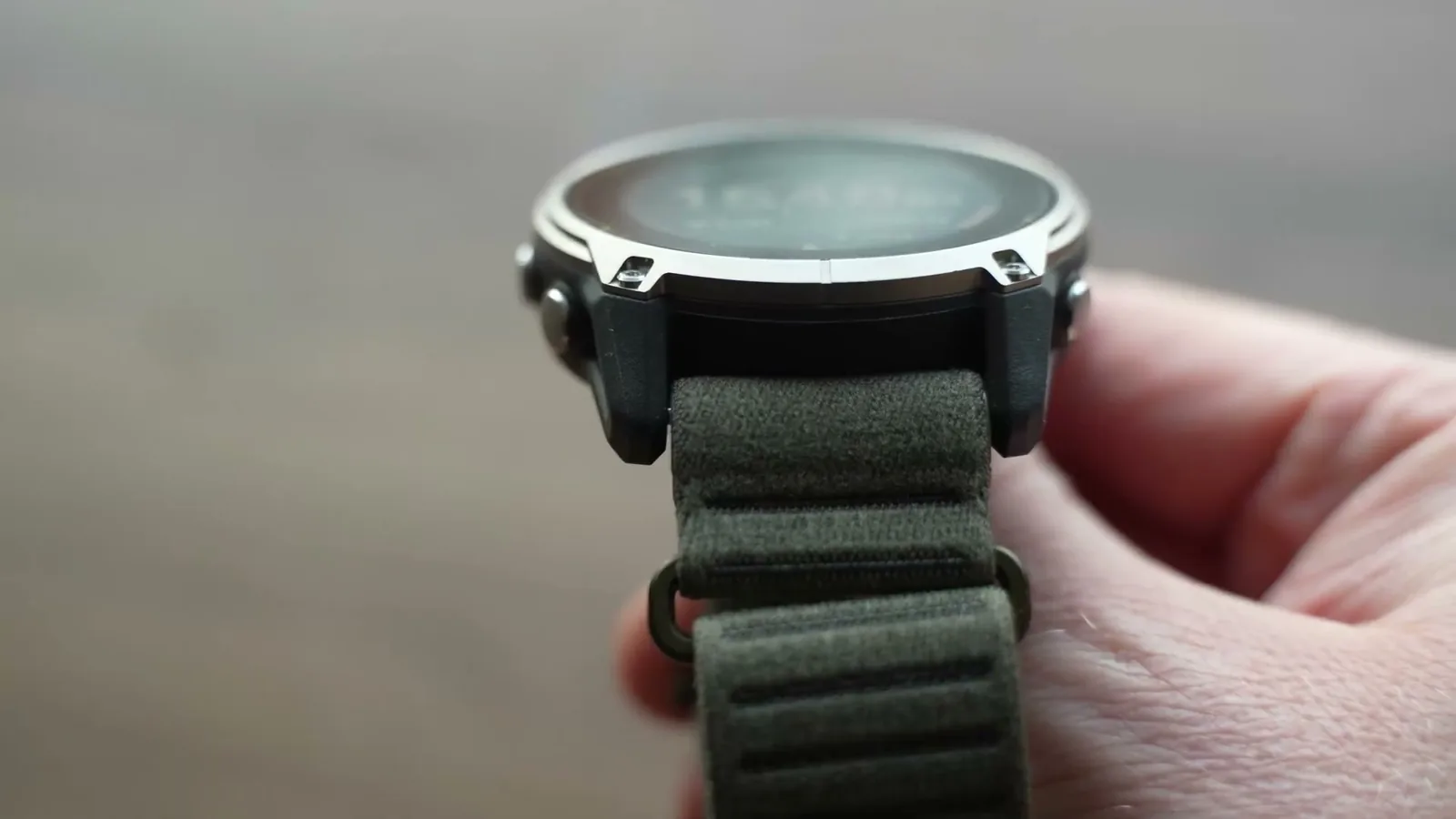
As far as physical differences go, I think it basically comes down to the color and the band. The Enduro 4 ships with Garmin’s new ComfortFit band, and I would still say that the UltraFit band on my Enduro 3 is the most comfortable band you can get on a Garmin. It is also lighter and a bit simpler.
You might ask why Garmin would switch, and the answer is that the new band is just so easy to take off and put back on. That is really important if you use your Enduro in different situations. On the Enduro 3 I actually have to open the band and pull it out, and I’ve been doing that a lot because I use my Enduro 3 as a bike computer. With the new band on the Enduro 4 this is a lot easier.
I do like the ComfortFit band, but I like the UltraFit nylon band even better, because with the metal pins on the new one I notice the watch on my wrist a little bit more, and it doesn’t feel as comfortable. There is more on this in my ComfortFit vs UltraFit comparison.
A stronger white LED
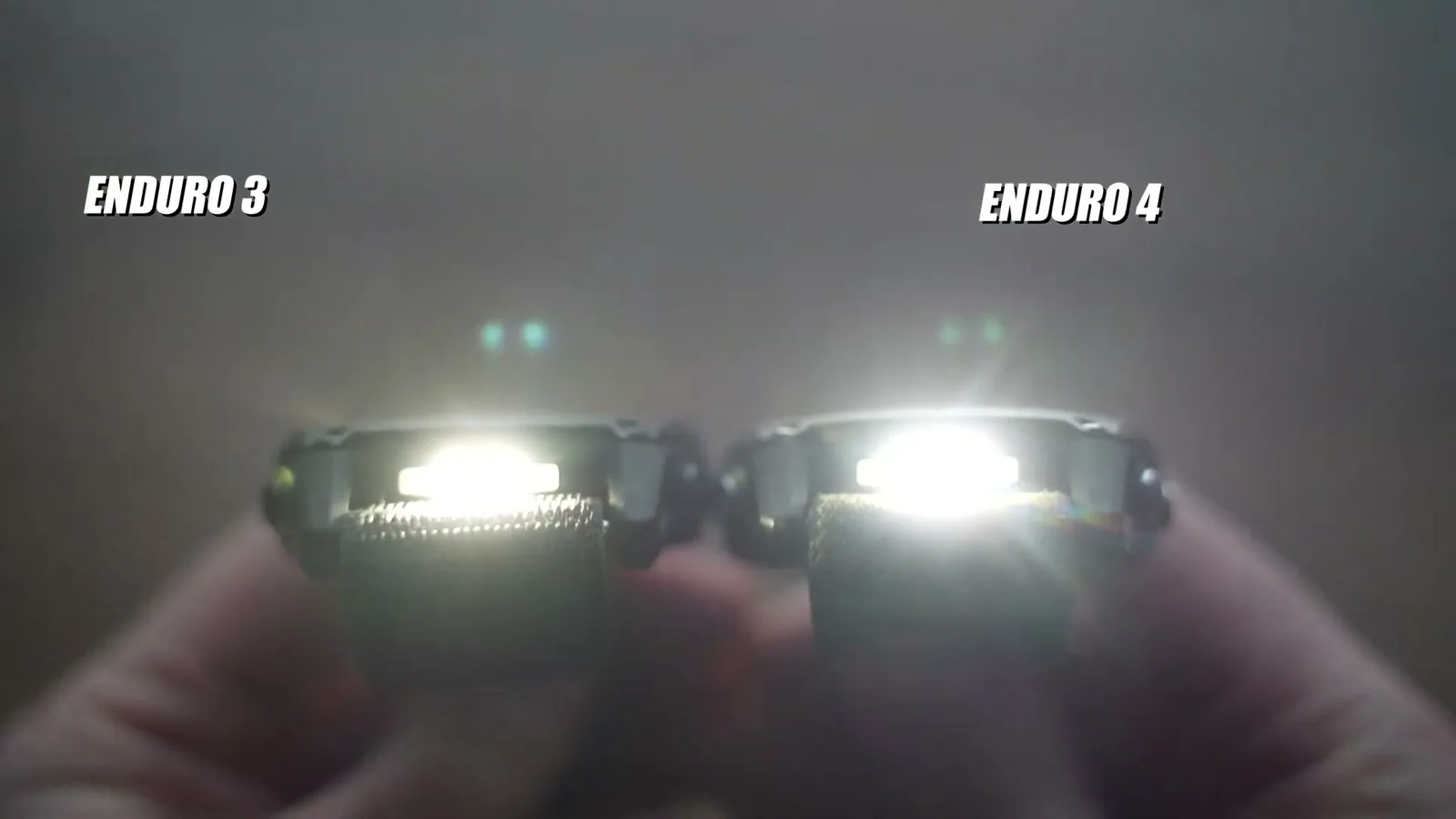
One thing I have noticed is that the white LED flashlight is now a bit stronger at full brightness, and I think the light is also a little bit colder. As far as I can see the red one is pretty much the same. I live in Trondheim, and Norway is pretty dark for about 6 months a year, so I think it is really nice to have that light readily available.
Internals and software
Overall I can understand why Garmin kept the formula so similar, but more or less this is a Garmin Enduro 3.1, or an Enduro 3 Pro if you like. There isn’t that much new to talk about.
Yes, the internals are better in terms of RAM and processing, and you can notice that a little bit. In this first week I’ve noticed it when opening the morning report and the evening report. On my Enduro 3 those take about a second or two from when I press the button until they actually start, and on the Enduro 4 they start immediately.
It also comes with a bunch of new features, and the one I’m really excited to try out over the long term is the option to put several activities together into one. Sometimes you do activities that are related to one another, but you haven’t been able to combine them the way you can with a triathlon.
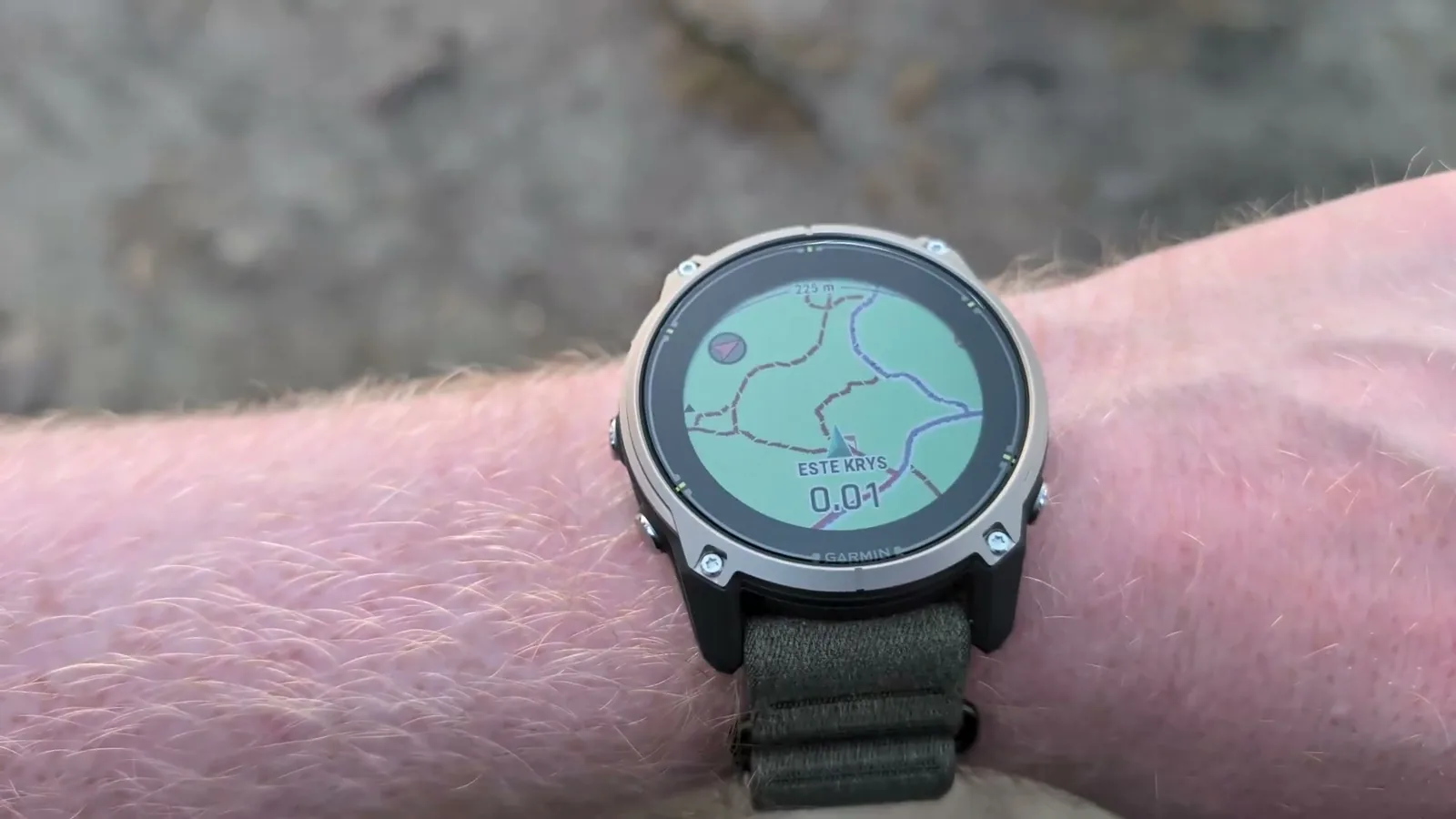
I’m not the heaviest map user, so I don’t think I’m the target audience for the faster maps. As for the larger internal storage, I think those of you who keep a lot of music and podcasts on the watch and listen over Bluetooth will be happy about that one.
Bugs and what’s missing
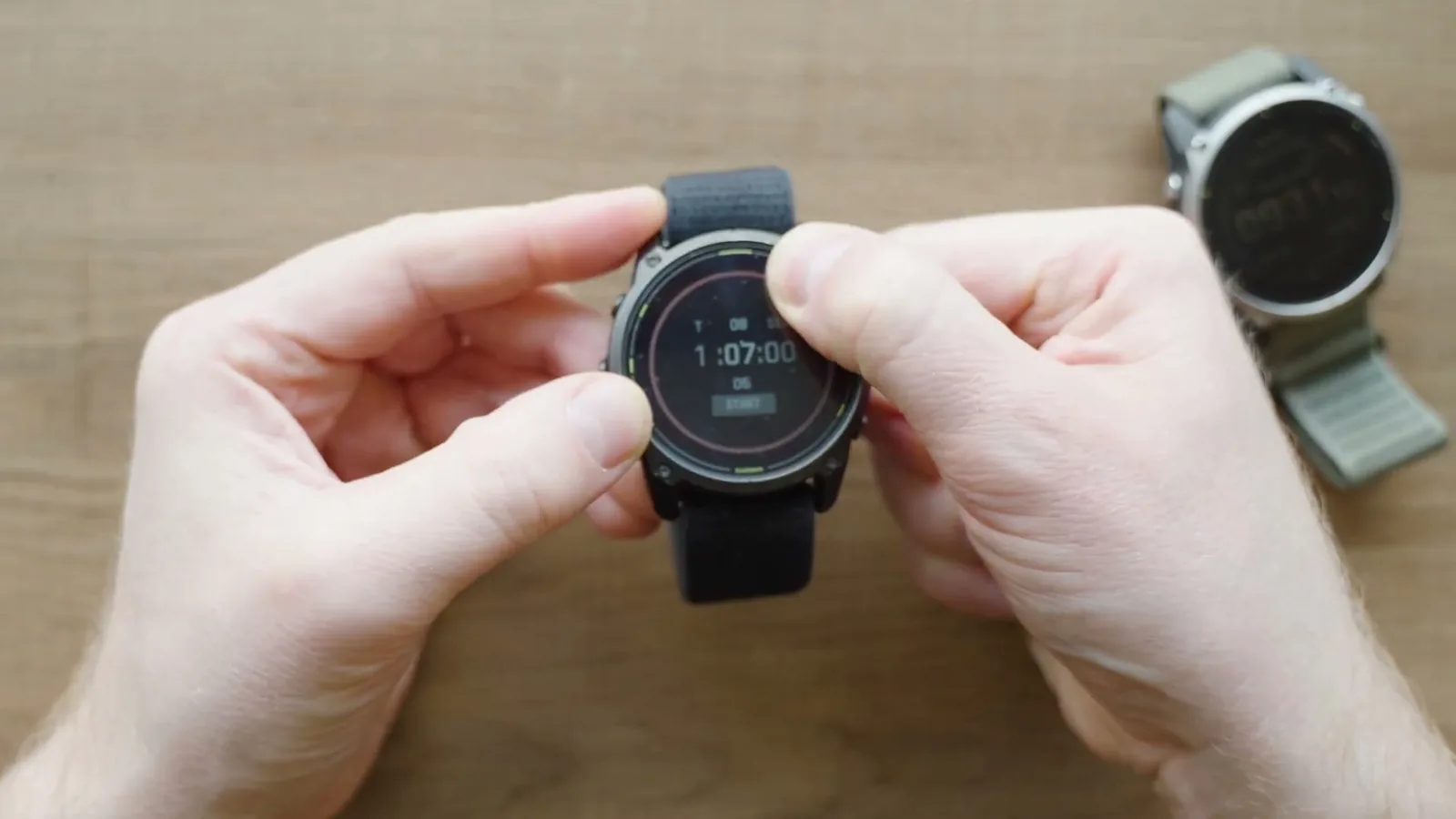
There have been a few bugs, though not as bad as when I got my Enduro 3. The issues I’m having so far are related to the touchscreen. I use the timer quite often, and the slider for the timer is a bit unresponsive when you drag it around. On the Enduro 3 it is more precise.
Underneath, I think this device is closer to the base model Garmin Fenix 9, so it will probably be quite easy for Garmin to roll out the same updates to the Enduro 4. Ten years into Garmin, I have had pretty good experiences with frequent updates fixing and smoothing out the software issues I’ve run into.
I would have liked to see LTE though. That is a really nice feature if you want to go out in the forest for a run and just leave your phone at home. If something were to happen, you would have incident detection, and you could use the LTE connection to contact your friends and loved ones, and even emergency services.
Price and who the Enduro 4 is for
The Enduro 4 ships at the same price the Enduro 3 did, so Garmin hasn’t raised it, which I think is a positive thing. This is still an expensive premium watch.
So who is it for? I think this device is not for the Enduro 3 user. The two are too similar, and with Garmin releasing its software features to both the Fenix 8 and the Enduro 3, I think the argument for going from the Enduro 3 to the Enduro 4 is less appealing. My one year review of the Enduro 3 covers why I still rate that watch.
If you are on the Enduro 2, or the Fenix 5, 6 or even 7, you might want to consider taking the jump. I think the Enduro line has now evolved into what Garmin initially intended for the Fenix E series, a device that has all the features of the Fenix line but comes in at a much lower price.
These are just my initial thoughts after one week. What do you think of the Enduro 4, and what would you like me to look further into?
Where to Buy
Disclosure: The links above are affiliate links. If you purchase through these links, I may earn a small commission at no additional cost to you. This helps support the channel and allows me to continue creating content like this. This is not a paid review. I bought the Enduro 4 with my own money, and Garmin has had no involvement in this article or the video.