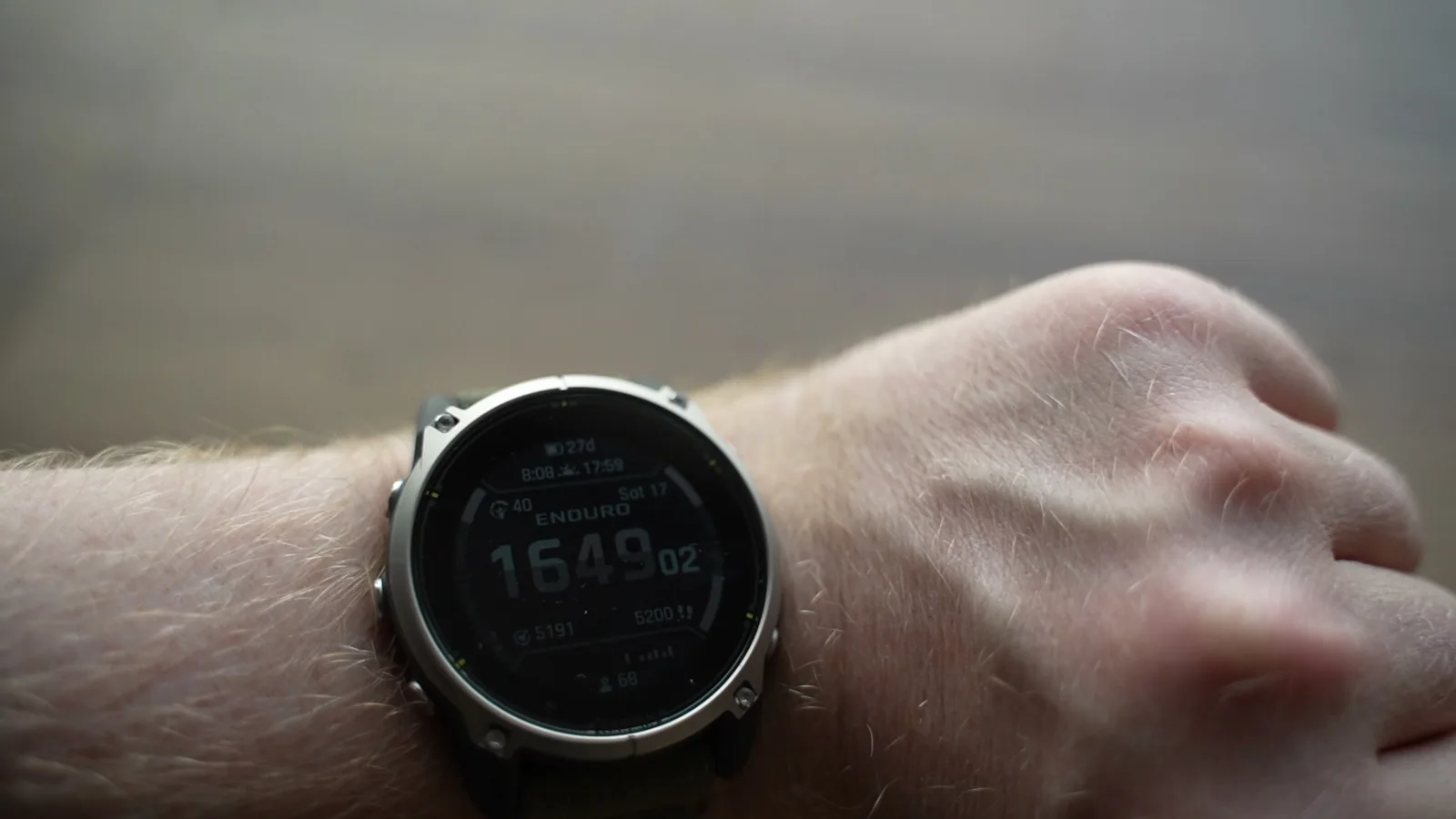
After five weeks of owning the Garmin Enduro 4, let’s take a look at how it has actually been to live with. The experience so far has been good, but I’ll be honest right away, I haven’t really had the time to test it out thoroughly, so this is just my impressions of how I’ve been using the watch on a day to day basis, and the things I think you should be aware of if you’re considering it.
If you’re wondering whether to go for this one or the Enduro 3, I made a video about that after my first week with the Enduro 4, and I also went through the pros and cons of the new band this watch comes with in ComfortFit vs UltraFit.
Who the Enduro 4 is for
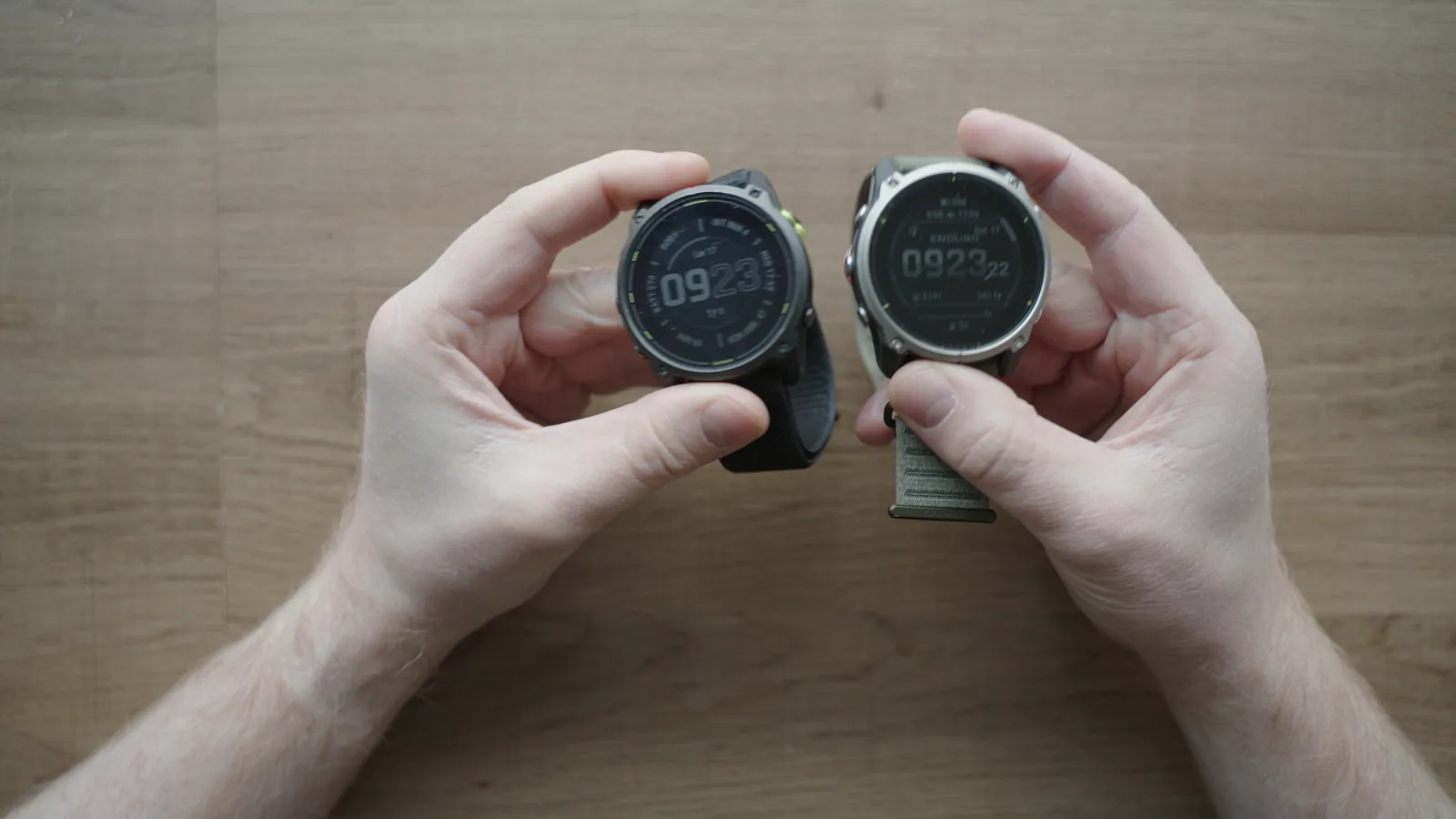
You can say the Enduro 4 is Garmin’s flagship for ultra endurance athletes, and it is for the user who simply wants the best battery life, hence the Enduro name. That battery comes in a big and quite thick 51 mm watch, and I think that very identity is both its greatest strength and its biggest weakness.
That being said, given the battery life and the memory in pixel display, I think it’s also a really nice combination for everyone who just wants almost all of the premium features you get on the Fenix 9, along with a bigger display that you can use for maps.
For me, this is the optimal device for my kind of activities. In the past I’ve used the Enduro in an endurance cycling race, where I tracked the activity over 515 km using the watch as my bike computer, and it is also my daily training, fitness and outdoor companion. Those three pillars are the reasons why I went for the Enduro and not for the Fenix.
Living with a 51 mm watch
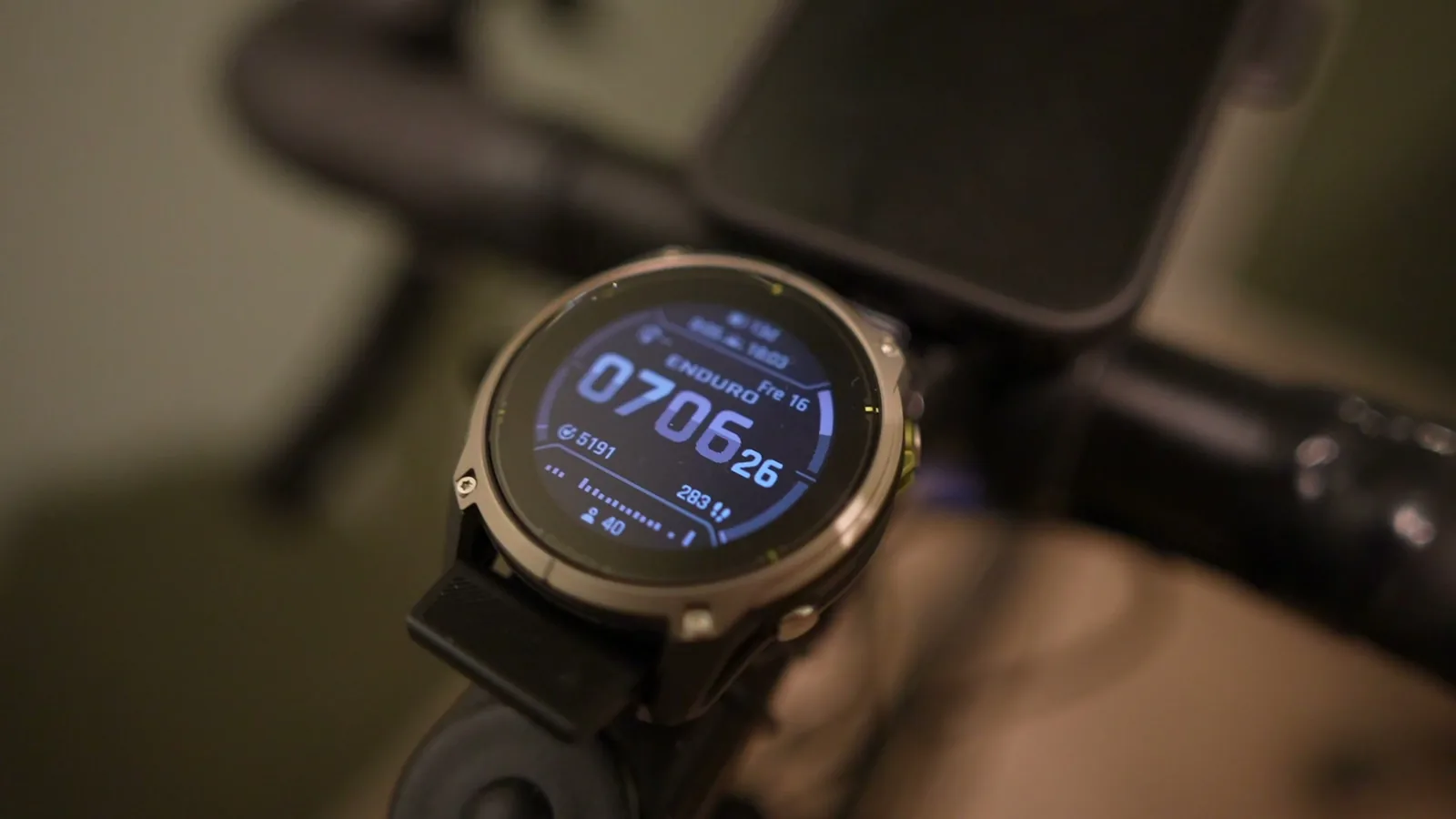
So how has it been using it on a day to day basis? Here’s the biggest trade off. It still is a quite big watch, and in practical terms it can get caught whenever you’re taking jackets and shirts on and off, just due to its size. In my experience this is particularly an issue with a 51 mm device, and I didn’t have it to the same degree with my Fenix 7, which I had in 47 mm.
I think this has to do with what’s inside, because a memory in pixel display with a large battery behind it makes the watch quite thick. For me that’s not necessarily a dealbreaker, since what I’m getting in return is really good battery life. And if you’re considering the Enduro and want it to feel a little less large, you should consider getting the UltraFit band, because that makes the watch kind of disappear a lot more on your wrist.
Activities and maps so far
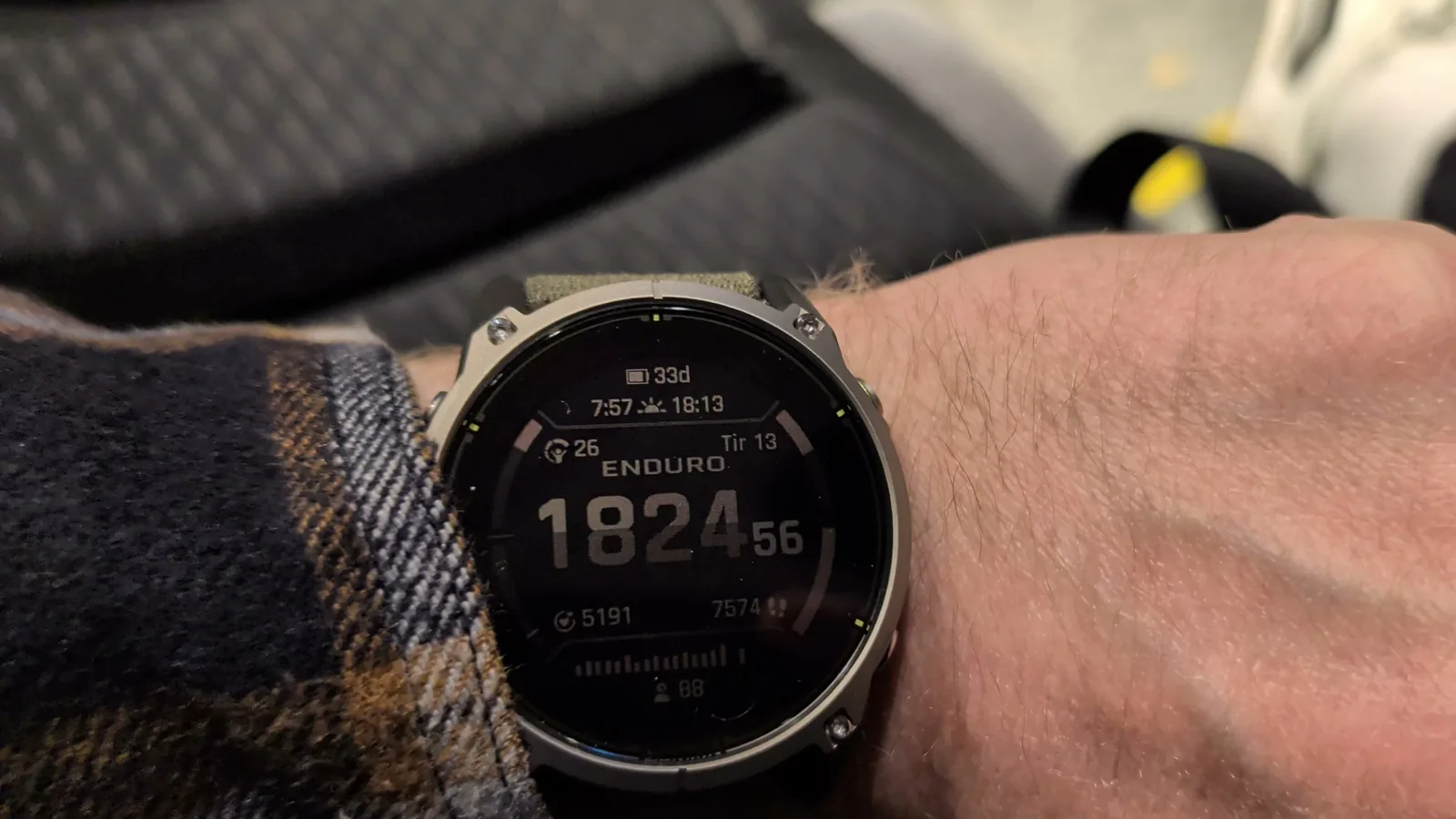
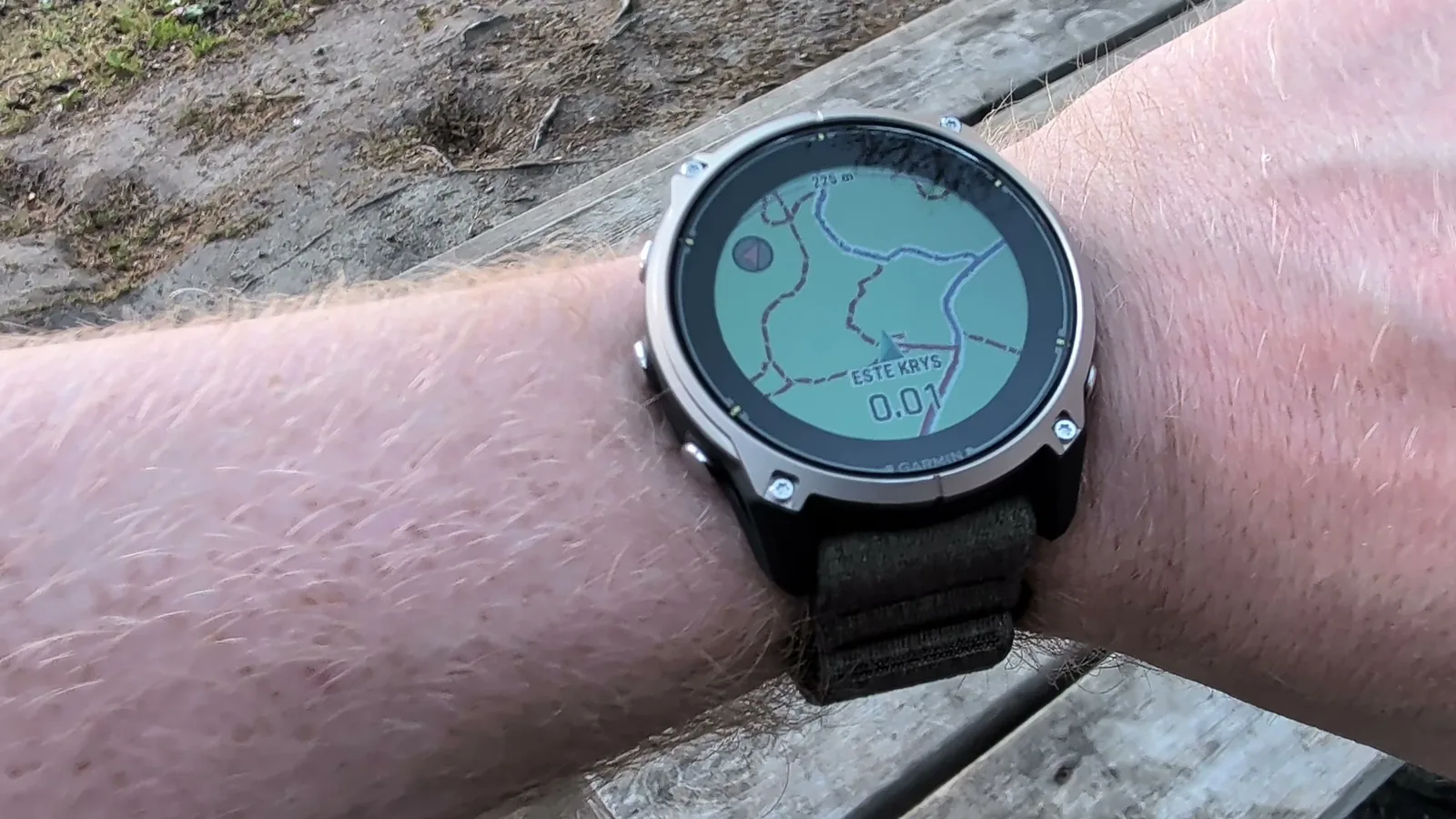
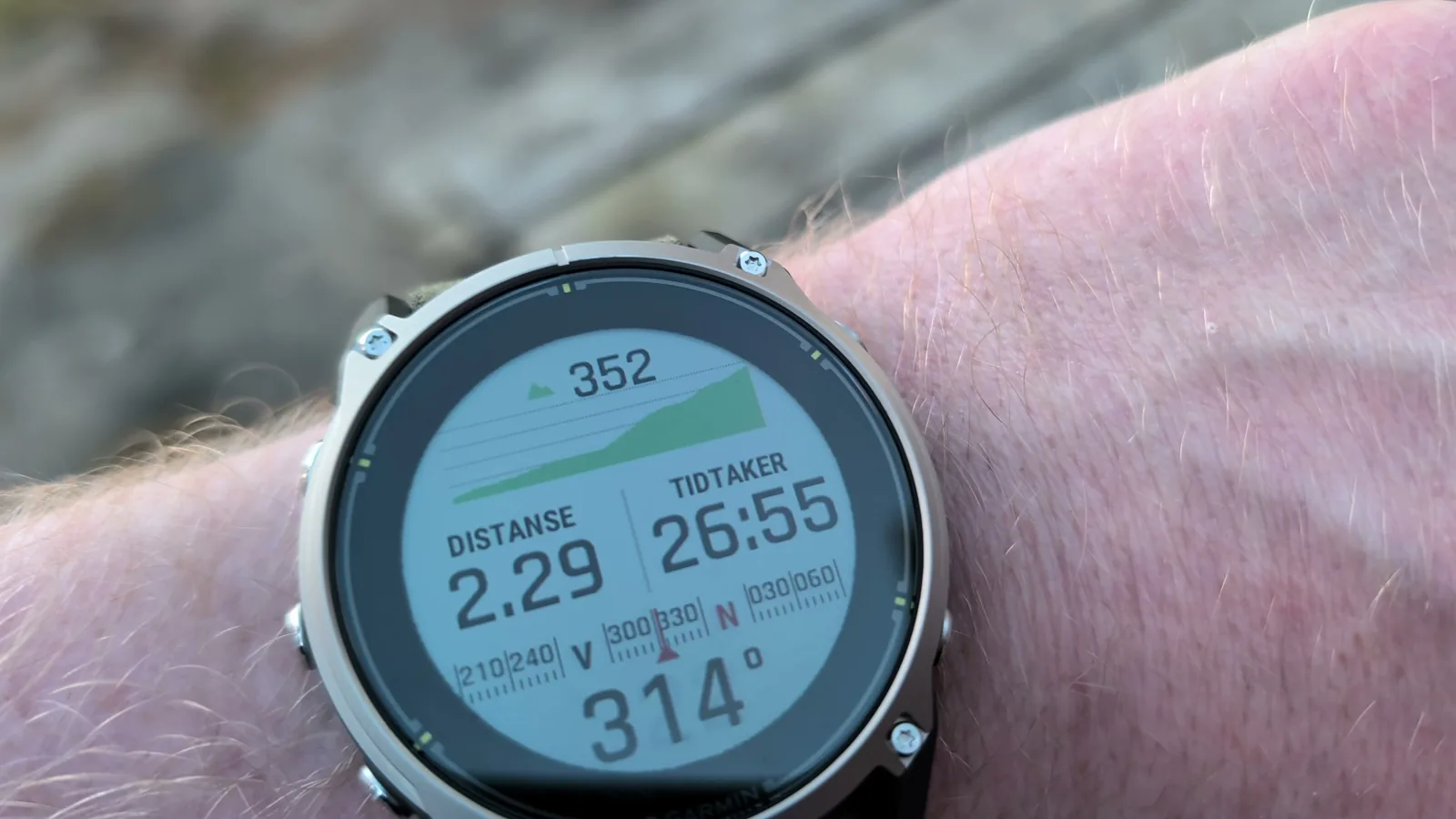
So far I’ve been using it for strength training and indoor biking, and I’ve done a lot of walking and a little bit of hiking. If you’re coming from the Fenix 8 and Enduro 3 platform it will feel very familiar, software wise and in most other ways as well, which I think is a good thing.
I’ve just gotten a little glimpse of how it is to use the maps, and I haven’t really felt the performance difference as of yet. As far as I can see they load a bit faster and they’re a little bit snappier, especially when you zoom in and out, which I think is more of a quality update than anything. So the updated map feature that is supposed to be a lot better is, I would say, fine.
The flashlight is still the feature I use every day
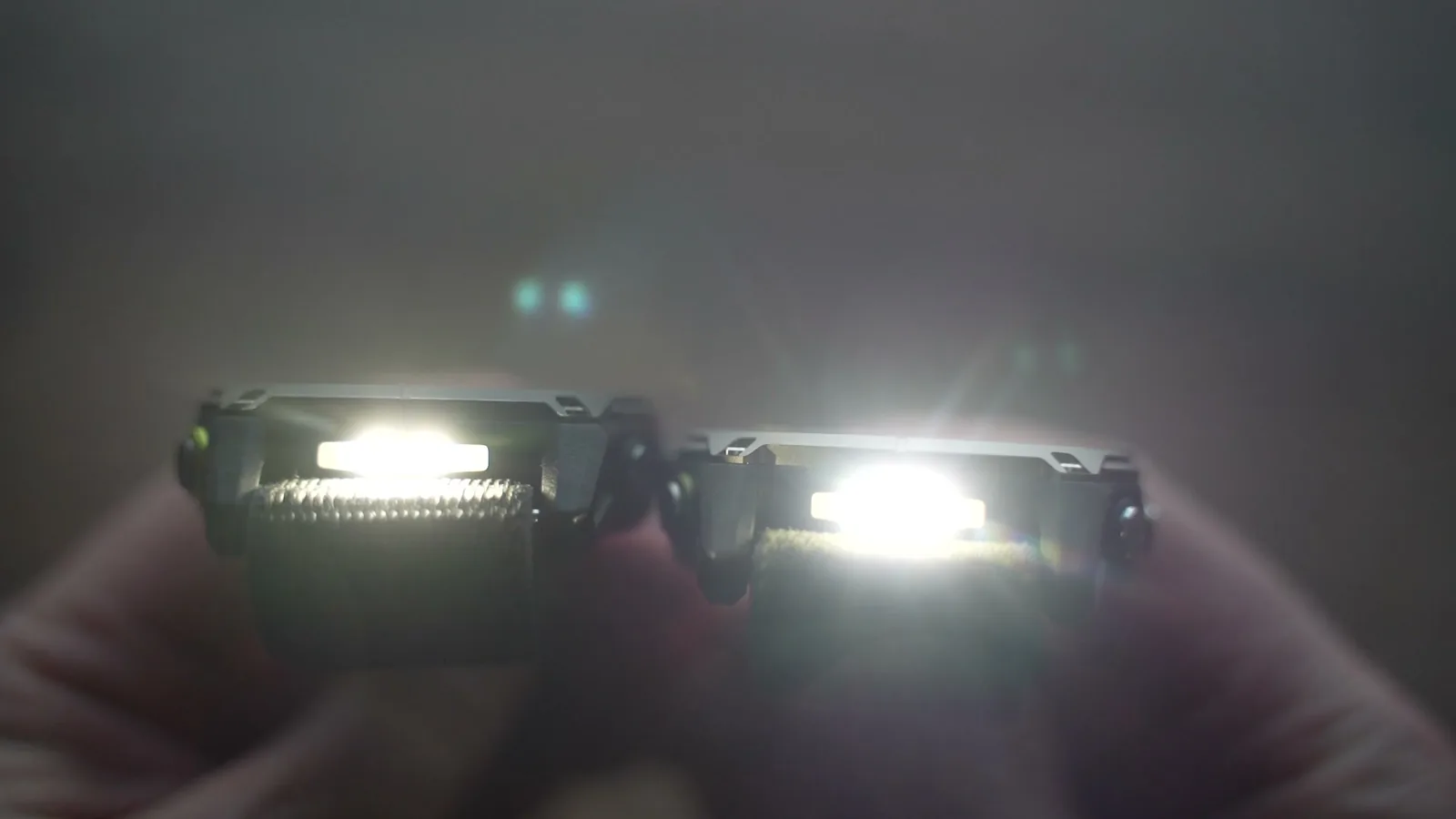
There was actually this one time when we were hiking in the forest and there was a passage I had to get through that wasn’t lit up, and I didn’t have a headlamp with me. For that very isolated 5 to 10 minute part of the trail, it was really nice to have that LED flashlight on my watch.
The flashlight is something I use every day, especially here in Norway, and up in Trondheim it’s getting really dark now. That being said, you can of course do the exact same thing using your phone, but it’s just convenient to have it on the wrist, where it’s two presses of a button and the light is on.
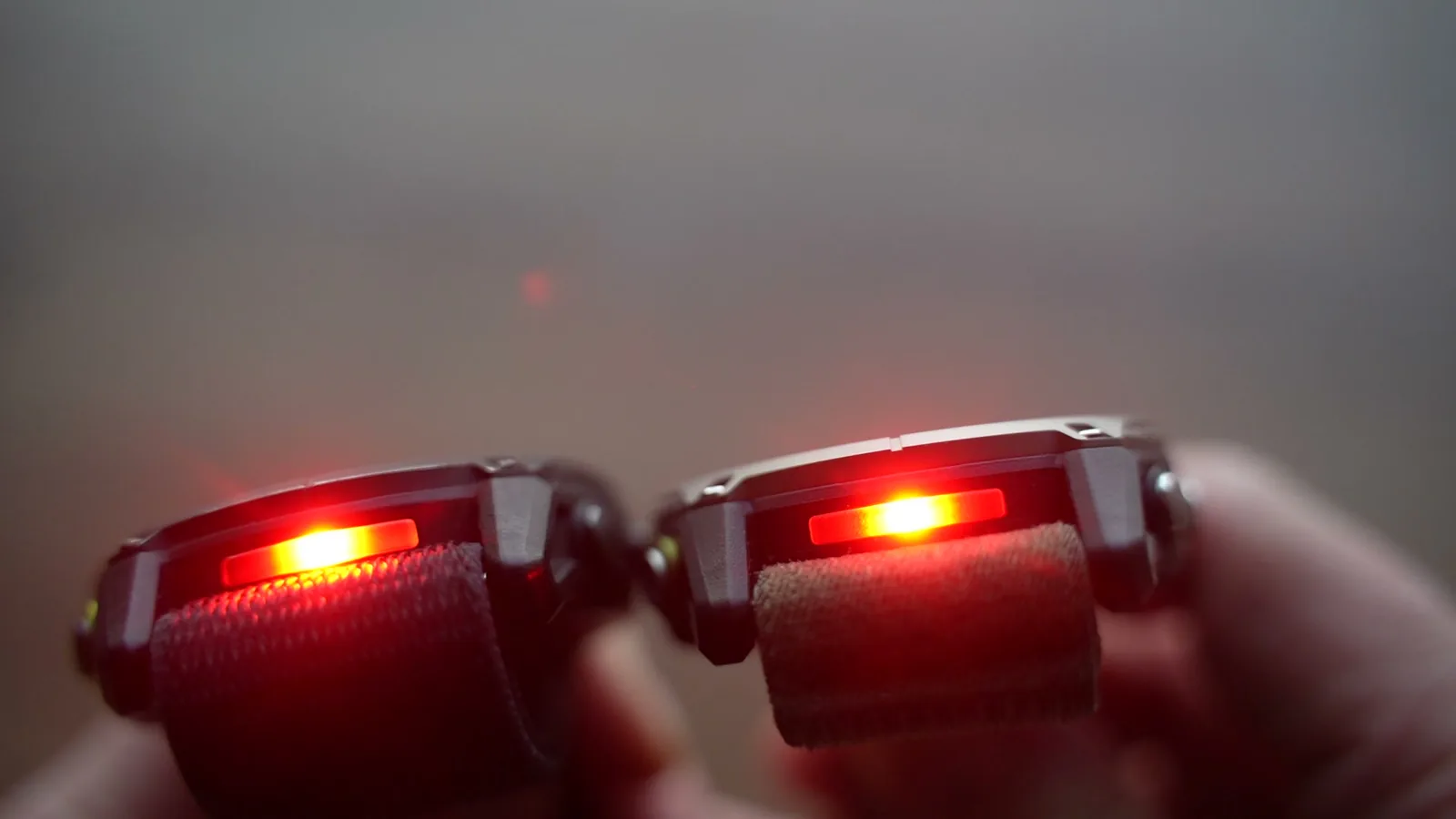
I also really like the red LED, especially if you have a partner and you get up earlier or go to bed later than they do, because then it’s actually quite nice to use that red light to navigate around without turning on the light. I think it’s also really nice if you just want to preserve your night vision when you’re in the tent and it’s dark. And speaking of which, you actually can hang the watch up in your tent and use it as a tent light. I think it’s better to have a dedicated light for that, and do know that the LED consumes a lot of battery. I haven’t tested how much, but it’s nice to have as an extra feature.
There are also a lot of convenient features that you get on a lot of other watches that I still really appreciate on this one, and Garmin Pay is something I use on a daily basis.
The ComfortFit band, five weeks later
What’s interesting is that after my video about the new ComfortFit band, I’ve seen a lot of you guys being more positive than negative to it, highlighting the fact that it does look a little bit better and that you now get the best of both worlds, the QuickFit as well as a nylon band.
I still find it a bit too expensive, and I’ve been thinking about going back to the UltraFit, because on a watch this large I prefer to have as comfortable a band as possible. For me the QuickFit isn’t that important. I do a lot of biking, where the watch has to come off my wrist, but once you get the hang of taking the band on and off, it’s not really that big of an issue.
Buttons and build
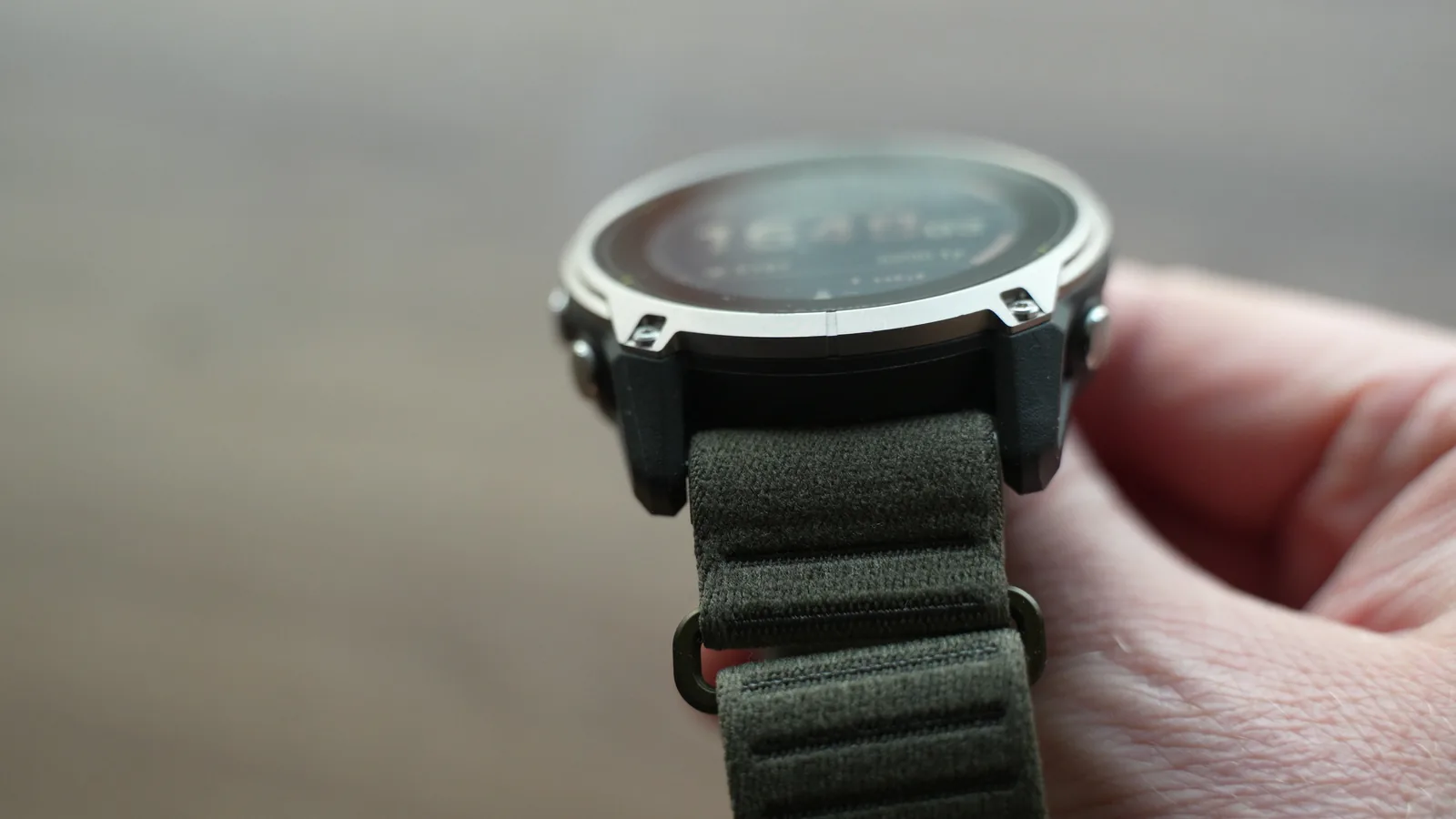
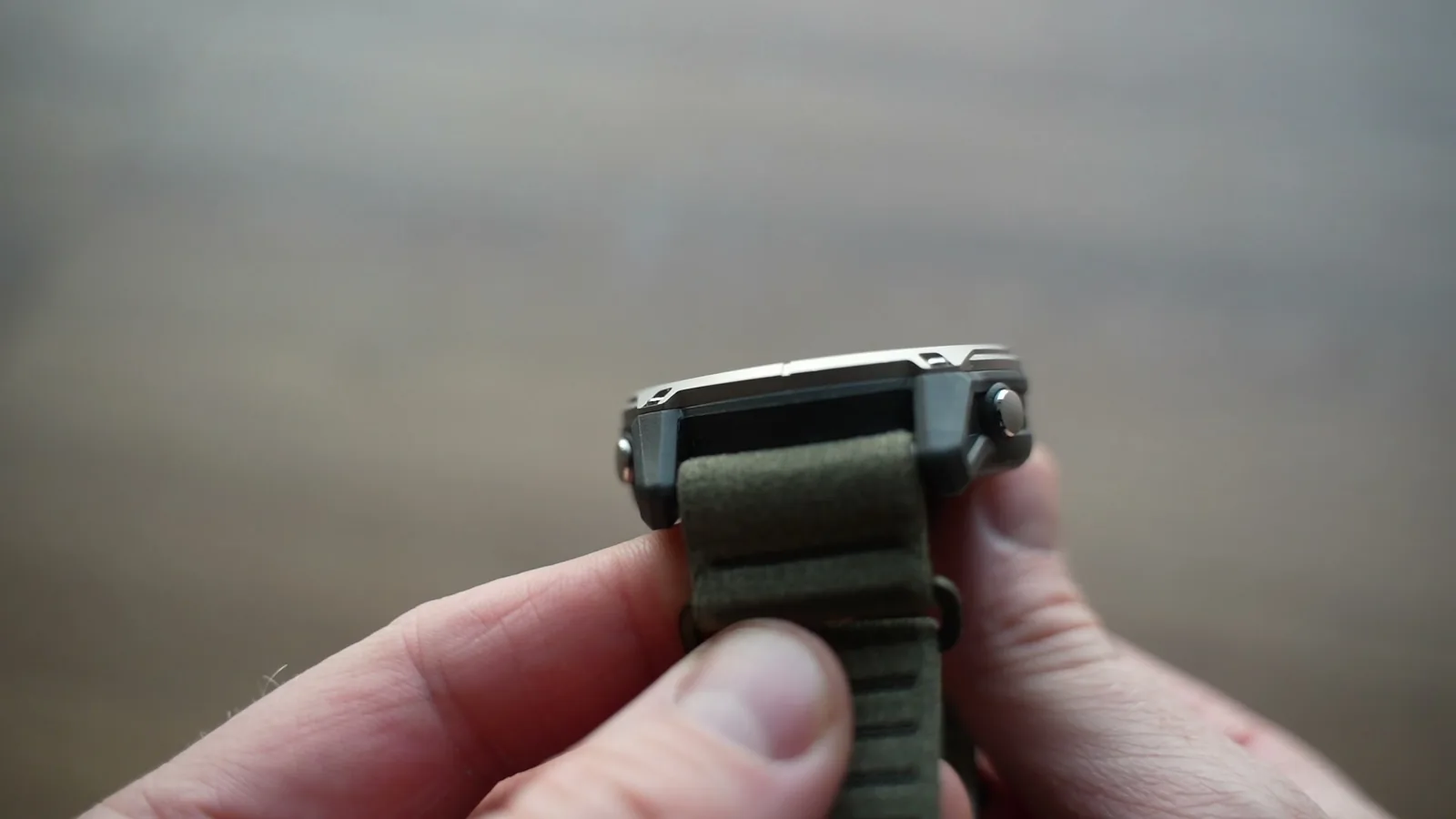
Another thing I really appreciate about this device is that the buttons are actually a bit clickier than they are on the Enduro 3. Maybe it was like that in the beginning with the 3 as well, but on the 4 you really feel how clicky they are, and I really like that tactile feel. On the Enduro 3 there is a click, but it’s not as clicky as it is on the 4.
The case is still plastic, with just that titanium ring around the screen. Some of you might find that it makes the watch feel less high end than one with more metal, and that’s something you’ve got to decide for yourself whether you want or not. I think there are actually some advantages to a plastic device in the colder climates of the world, because having a watch that is warmer to the touch is really noticeable when you’re out, for example cross country skiing.
And it is protected where I think it matters the most, which is the bezel and the sapphire screen. I’ve had zero scratches on the screen of my Enduro 3, and I expect not to get any on this one either.
Software and bugs
So far, what’s interesting is that I had more bugs on the Enduro 3, which I got 6 months after it was released, than I’ve had with the Enduro 4 almost immediately after it was released. I was a little bit worried about that going in, but I think the difference probably has to do with the fact that the issue I had with the Enduro 3 was actually quite critical. Dismissing a notification could cause the whole watch to crash, and it took a few updates before that problem was solved.
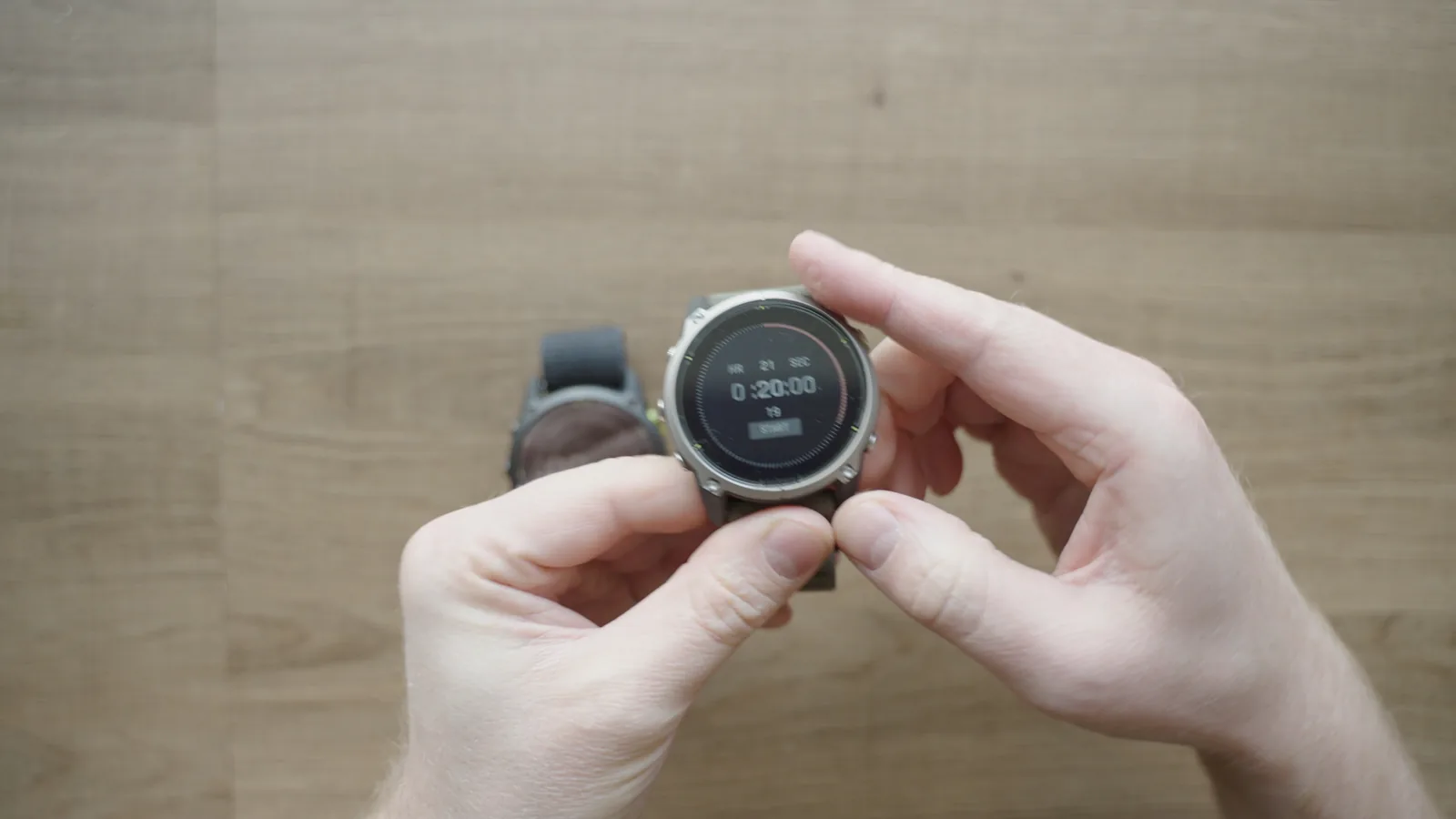
On the Enduro 4 the software has pretty much been a non issue, which I think is a very good thing. The one thing that is still there is the slider for the timer on the touchscreen, which is a bit unresponsive when I slide it around. Not a big deal, but something to note.
No satellite messaging, and why I’m fine with that
In terms of features and specs, I think this is a watch that in most cases is competing with the very best that Garmin is offering. What it doesn’t have is the satellite connectivity through Skylo that you get on the Fenix. I do like to have that capability sorted out, but for me it sits on a dedicated inReach instead, and I find that much more convenient and also a bit safer.
Battery life after five weeks
I got the watch at about 80 to 90% right out of the box, and I didn’t charge it for maybe two, two and a half weeks. After that I’ve just been charging it up a little bit in between tasks, so I haven’t had the chance to get it to 100% ever since I got it. The fact that I’ve charged it two times in five weeks, and didn’t charge it fully either of those times, is more than fine for my use case.
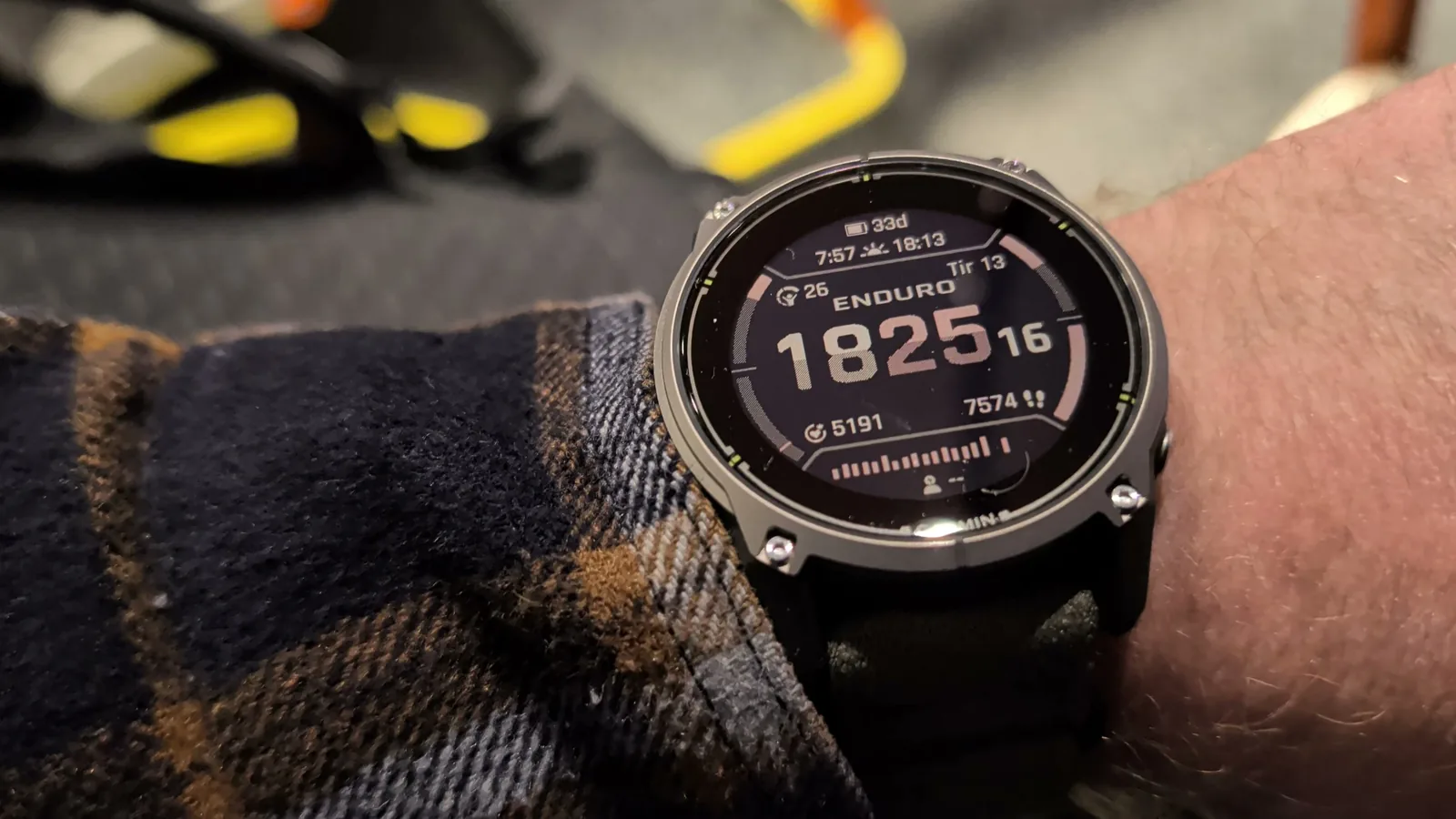
What Garmin is saying is that you get up to 36 days in smartwatch mode when it’s fully charged, and up to 90 days with solar. Just so you’re aware, those numbers aren’t the whole picture. I think you can expect about 2 weeks if you’re tracking every day and you track a lot using GPS, and you can expect that number to be even lower if you’re using music and the flashlight in addition.
I never experienced 90 days on my Enduro 3, since I didn’t spend that much time outside during the summer when I owned it, and I don’t expect this one to last that long for me either. But given that this is basically the same device with a little bit switched up internals, I think you could probably get 90 days in smartwatch mode during summer if you don’t use it for tracking, and in practice probably something like 60 or 70 days with a little bit of lighter tracking. That is my guess based on the Enduro 3, and not something I have measured on the 4.
If you want to get more out of the battery, I went through the settings I changed in 5 Garmin settings I changed to get better battery life.
What I haven’t tested yet
I have not tested the GPS accuracy, the heart rate accuracy or the sleep tracking well enough yet to say anything useful about them, and I haven’t used the maps for navigation on a longer trip either. What I really look forward to is trying out the Enduro 4 in its right element, so stay tuned for my long term review for that.
So is the Garmin Enduro 4 worth it?
If you’re reading this, you’ve probably been asking yourself that, and I’ll give you the very annoying answer, which is that it really depends. I think this is a great device if you see it from an isolated viewpoint, but compared to other devices it becomes a little bit more difficult to recommend, especially compared to the Enduro 3.
So should you upgrade from an Enduro 3 to a 4? Probably not, and I don’t recommend it. And if you’re coming from a Fenix, either the 8 or the 9, I guess you’re probably interested in this device for the battery life.
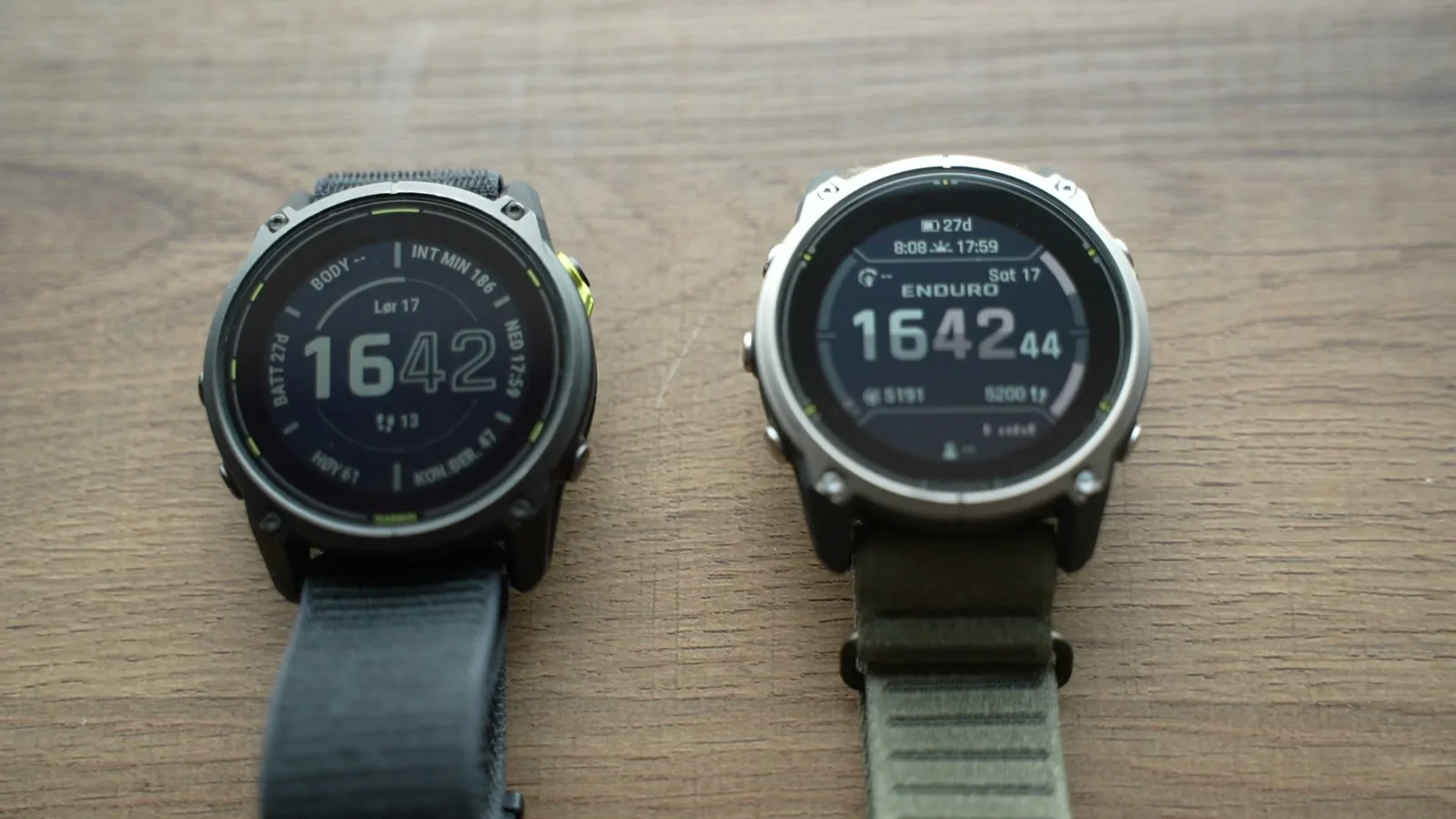
If you think the price is a bit too high, and at a list price of $899.99 this is still an expensive watch, the natural choice is obviously the Enduro 3. It’s hard to tell how long Garmin will be selling it, probably for a couple of years, but both the Enduro 3 and the Enduro 4 have come in limited availability compared to the Fenix, and I wouldn’t be too surprised if the Enduro 3 went out of production quite soon, just because of how great a deal it is compared to the 4, especially now that it’s getting most of the software features.
You should also consider the Fenix 8 in the version with the memory in pixel display, if you want a little bit more of the smart features. And the lower end alternative would be to look at the Garmin Instinct 3, probably the 50 mm version, which has almost equally great battery life, but not the mapping feature of the Enduro 3 and 4, and it also doesn’t have all the endurance features.
So what do you guys think? Are you considering the Enduro 4, and is there anything you would like me to look further into before the long term review? Please let me know in the comments.
Get the Garmin Enduro 4 here: https://link.amazon/B04f7HFM7
Get the Garmin Enduro 3 here: https://link.amazon/B05V5oVwO
Where to Buy
- Garmin Enduro 4: Get it here
- Garmin Enduro 3: Get it here
- Garmin UltraFit 26 mm nylon strap: Get it here
Disclosure: The links above are affiliate links. If you purchase through these links, I may earn a small commission at no additional cost to you. This helps support the channel and allows me to continue creating content like this.