I’ve had the Garmin Enduro 3 for over a year now, and it’s time for a thorough update. Is this premium endurance GPS watch still worth your money in 2026? Are there better alternatives? In this one-year long-term review, I’ll cover everything from build quality and durability to real-world navigation issues and how the Enduro 3 stacks up against the Garmin Fenix 8 and Instinct 3 lineup.
If you haven’t already, check out my six-month long-term review for the full initial impressions. This article focuses on what’s changed, what still holds up, and what you need to know before buying.
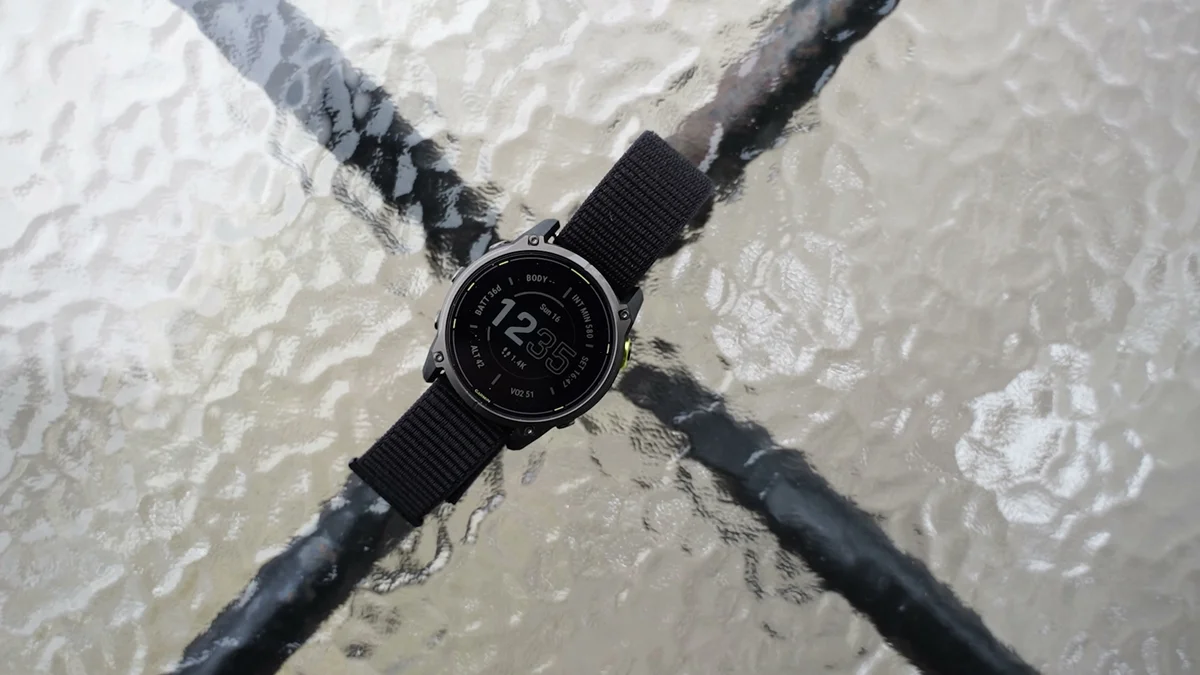
What I Still Don’t Like After One Year
After 12 months of daily use, there are really only two things that bother me about the Garmin Enduro 3.
The Green Accents
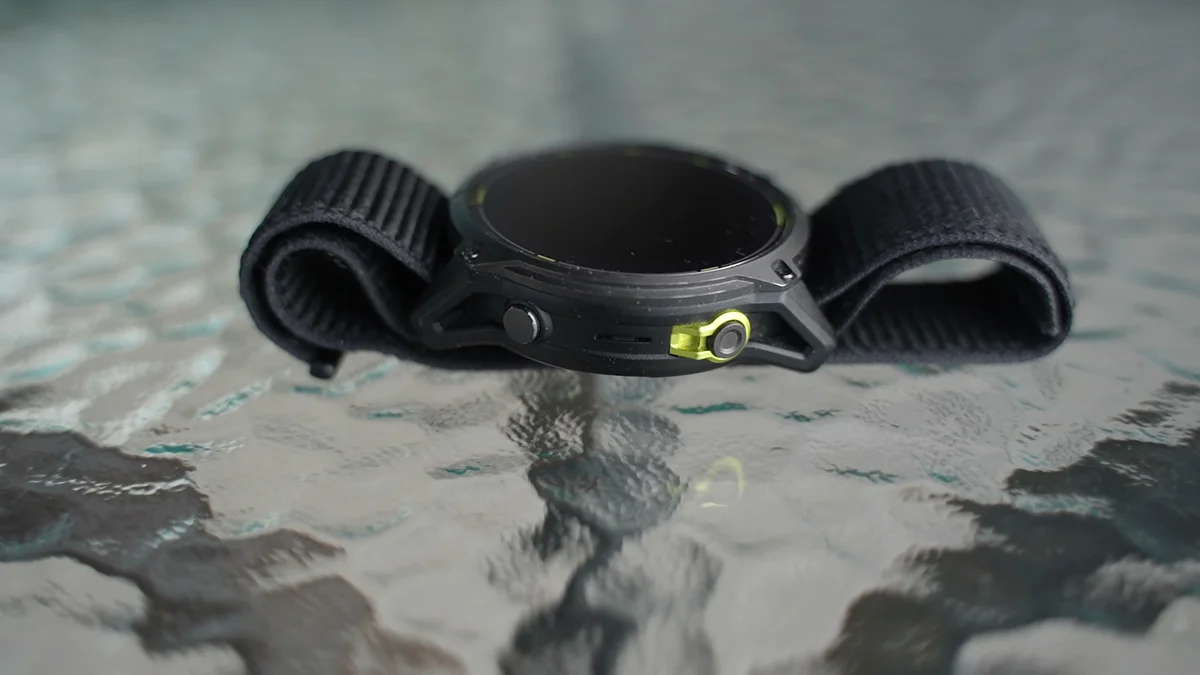
The lime green — almost yellowish — accent color is something I remain ambivalent about. Garmin has toned it down significantly compared to the Enduro 2 and Enduro 1, but it’s still there. I understand why Garmin kept it: the green accents are part of the Enduro line’s identity and help differentiate it from the more premium Fenix 8 lineup. Since the Enduro 3 is considerably cheaper than the Fenix 8, Garmin doesn’t want to cannibalize their flagship line.
It’s a minor aesthetic gripe, and honestly, you stop noticing it after a while. But if you’re someone who prefers a more understated look, it’s worth considering.
Map Compass Navigation Issue

This is a more serious concern. During a cross-country skiing trip in January, I encountered a significant navigation issue. When following a preset course with the map screen active, the compass was pointing me in the opposite direction of where I actually needed to go.
My theory is that keeping the map screen active continuously drained the system resources on this low-powered MIP display device, causing the compass to malfunction. This could be genuinely dangerous in a backcountry situation where you’re depending on accurate navigation.
My workaround: Keep the data screen active instead of the map screen. This prevents the system resource drain while still allowing you to track your route. I’d love to hear from other Enduro 3 users in the comments if you’ve experienced this issue — Garmin has pushed several updates since January, so it may have been resolved.
Important note: As I’ve stated in my hiking review of the Garmin Enduro 3, I still recommend this watch primarily for casual hiking within cellular coverage, not as your sole navigation device in remote backcountry situations. For serious off-grid adventures, pair it with a dedicated GPS device.
Build Quality After One Year

One of my biggest concerns going into this long-term review was how the Garmin Enduro 3’s build quality would hold up. The verdict? I’m genuinely impressed.
The Enduro 3 uses a mostly plastic (resin) case, which understandably raises durability questions. Here’s what I found after a year of heavy use:
- Case body: Very few visible scratches on the plastic case itself
- Titanium bezel: Minor scratches along the edges, which is completely expected
- Sapphire screen: Zero visible scratches — the sapphire crystal is doing its job perfectly
- Plastic back: Actually an advantage in cold weather — it’s warmer to the touch than metal, which I’ve come to appreciate during winter cross-country skiing

The key insight here is that the materials that matter most are premium quality: the titanium bezel protects the watch, the sapphire crystal keeps the screen pristine, and the metal buttons feel solid. The plastic body? You barely interact with it — you put the watch on, and you take it off. That’s it.
Battery Life and Solar Charging
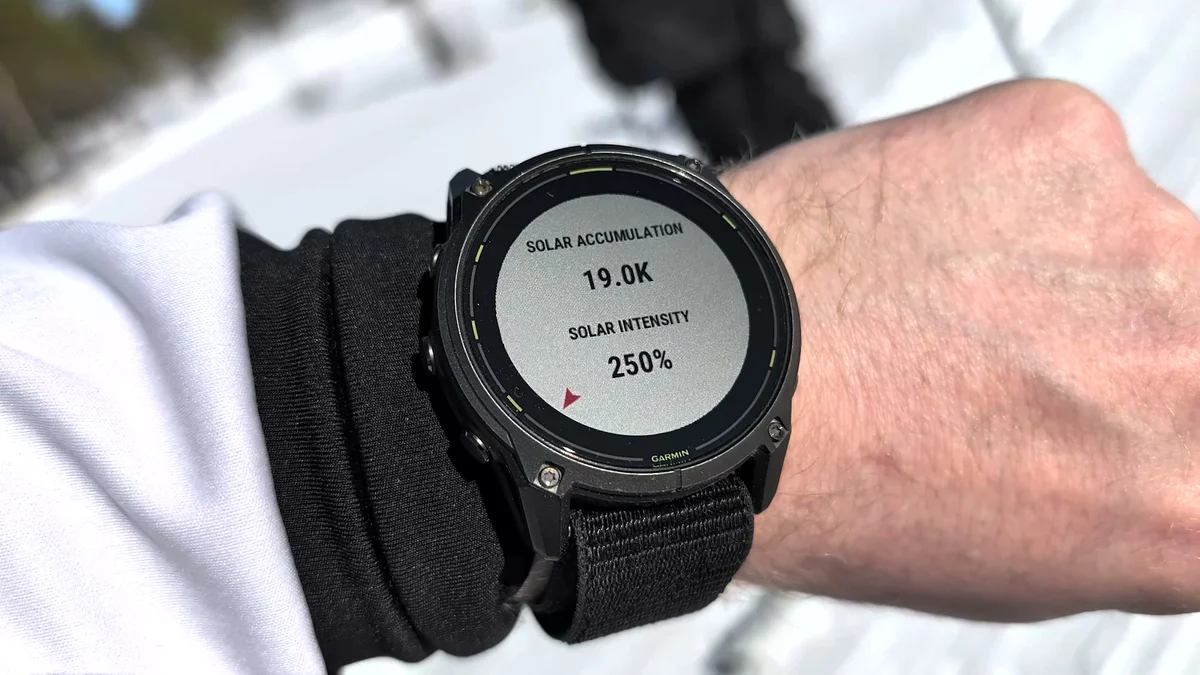
The Garmin Enduro 3’s battery life remains one of its strongest selling points. With the memory-in-pixel (MIP) display and solar charging capability, this watch can go for weeks on a single charge with regular use.
During summer months with plenty of sun exposure, the solar charging makes a meaningful difference. The MIP display looks fantastic in direct sunlight — actually getting more readable the brighter it gets — while sipping battery compared to AMOLED alternatives.
For multi-day activities like hiking trips, endurance cycling races, or ultra marathons, this kind of battery endurance is not just convenient — it’s essential.
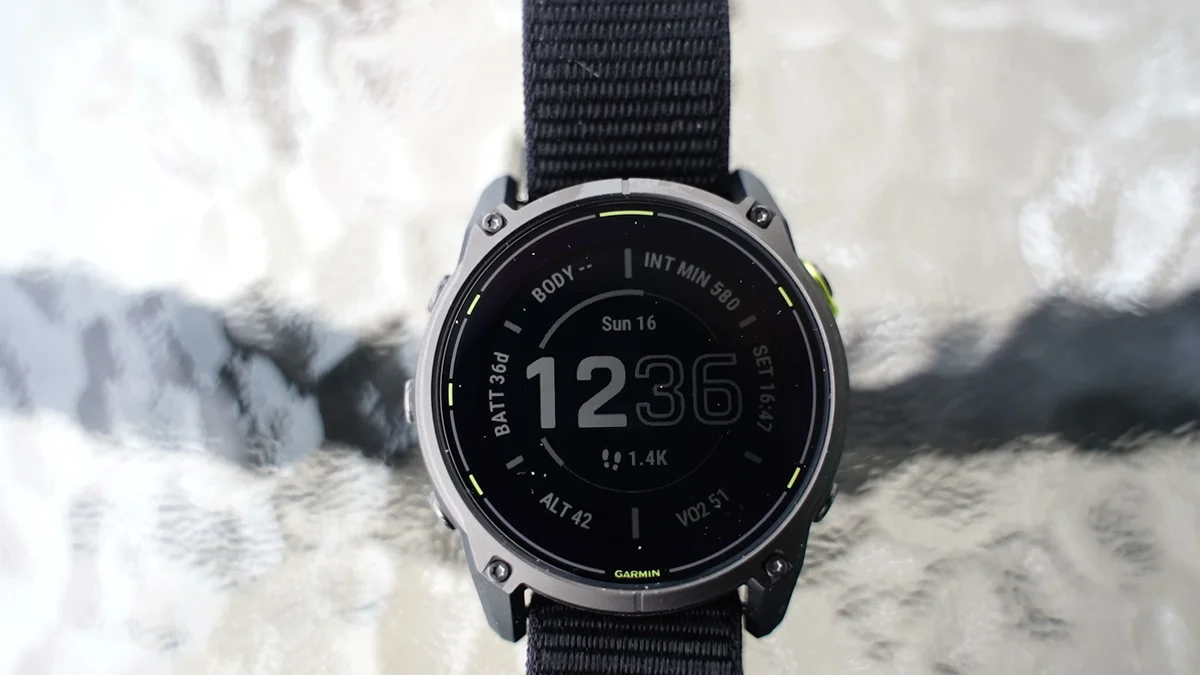
Who Should Get the Garmin Enduro 3?

The Garmin Enduro 3 is built for a specific user. Get this watch if you:
- Want best-in-class battery life in a full-featured GPS smartwatch
- Do multi-day activities like endurance cycling, ultra marathons, or multi-day hiking trips
- Prefer the MIP display that excels in direct sunlight and extends battery life
- Want premium features like maps, built-in music, Hill Score, Endurance Score, and Real-Time Stamina
- Need a bike computer backup — with the screen size on the Enduro 3, it’s the bare minimum for usable mapping during cycling (I used it as my primary navigation during an endurance race last summer)
- Don’t need the Fenix 8’s direct-to-roof buttons, speaker, microphone, or built-in InReach satellite connectivity
Garmin Enduro 3 vs. Fenix 8: Which One to Choose?
The Fenix 8 line is Garmin’s flagship, and it’s notably more expensive than the Enduro 3. Here’s when to choose one over the other.
Choose the Enduro 3 if:
- Battery life is your top priority
- You prefer the MIP solar display
- You don’t need a speaker/microphone
- You want to save money while still getting premium features
Choose the Fenix 8 if:
- You want an AMOLED display option
- You need the speaker and microphone
- You want direct-to-roof buttons
Choose the Fenix 8 Pro if:
- You need built-in satellite connectivity (via Skylo)
- Note: The Fenix 8 Pro’s satellite connectivity uses Skylo, which is less capable than the dedicated InReach Mini series
Get the Garmin Fenix 8 Pro here
Pairing with the Garmin InReach Mini

For those who venture beyond cellular coverage, I think the Garmin Enduro 3 pairs perfectly with a dedicated Garmin InReach device — either the InReach Mini 2 (which I’ve been using) or the newer InReach Mini 3.
With an InReach device, you can:
- Send and receive text messages via satellite
- Trigger an SOS emergency signal
- Share your location with contacts
This combination gives you the best of both worlds: the Enduro 3’s exceptional battery life and fitness tracking, plus the InReach’s reliable satellite communication. In my opinion, this is a more capable setup than the Fenix 8 Pro’s built-in Skylo connectivity.
Get the InReach Mini 2 here | Get the InReach Mini 3 here
The Instinct 3 Alternative: Save Money Without Sacrificing Much
Before pulling the trigger on the Enduro 3, seriously consider the Garmin Instinct 3 lineup. Here’s why:
The Instinct 3 comes in both AMOLED and MIP solar versions and offers excellent value. Here’s what you’d miss compared to the Enduro 3:
- Heart rate sensor: Elevate 4 (vs. Elevate 5 on Enduro 3) — though if you use an external chest strap like the Garmin HRM Pro Plus, this doesn’t matter
- No maps — but you can still follow a breadcrumb trail from Garmin Explore preset courses
- No built-in music
- No Hill Score, Endurance Score, or Real-Time Stamina
What you’d still get:
- Excellent battery life (especially the Solar version)
- Built-in flashlight
- All core fitness and health tracking
- Breadcrumb navigation
If you’re already using a Garmin InReach Mini 2 or Mini 3 for satellite communication, the Instinct 3 might be all the watch you need.
Get the Garmin Instinct 3 AMOLED here | Get the Garmin Instinct 3 Solar here
Using the Enduro 3 as a Bike Computer
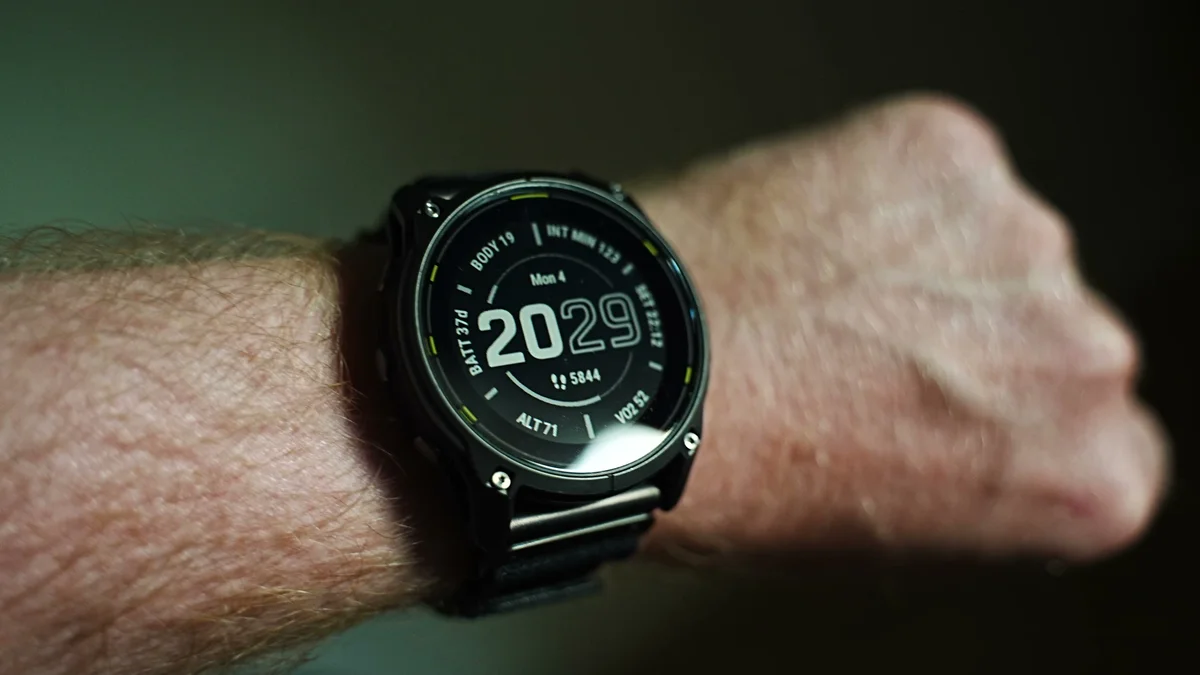
One underrated feature of the Garmin Enduro 3 is its ability to serve as a capable bike computer in a pinch. The screen size is just large enough to display mapping data while cycling, and with the right mount, it becomes a legitimate cycling navigation tool.
I used this setup during an endurance cycling race last summer, and it performed well. If you’re looking for a compatible mount solution:
Get my bike mount for using it as a bike computer | Compatible quick-fit mount that also supports bike computers
Final Verdict: One Year Later
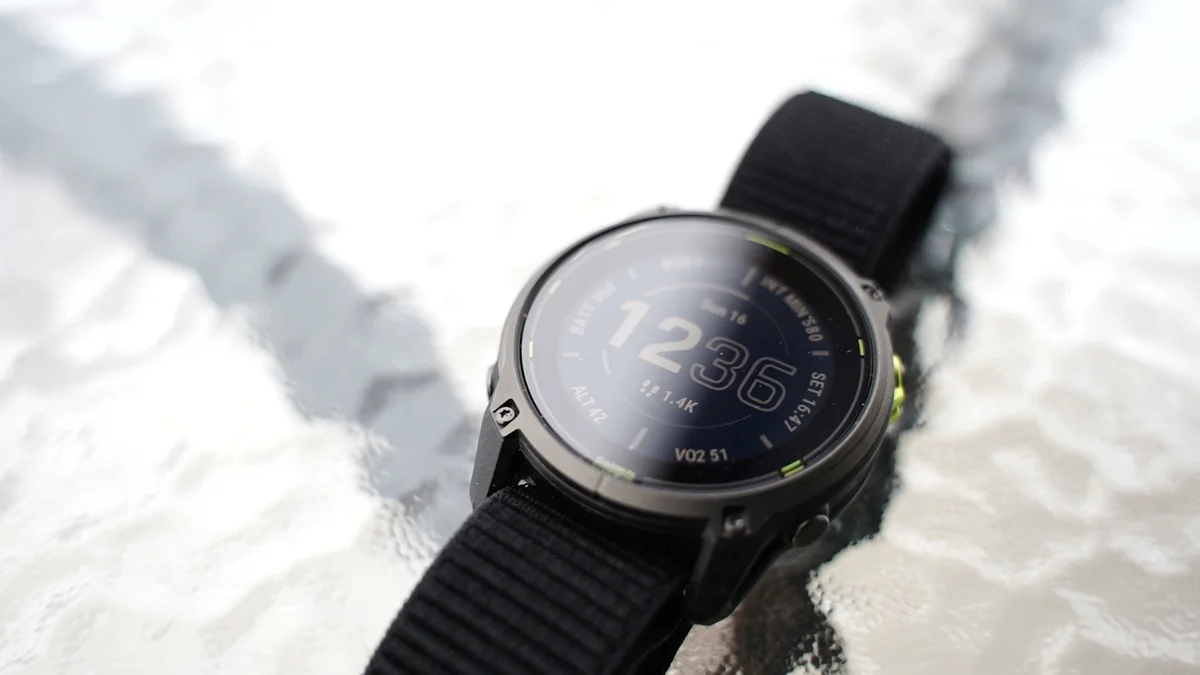
After a full year of daily use, the Garmin Enduro 3 remains my go-to sports watch. It handles everything I throw at it — health tracking, fitness monitoring, hiking, cycling, and cross-country skiing — with exceptional battery life and a display that thrives in any lighting condition.
The map compass issue during extended navigation sessions is a legitimate concern, and I hope Garmin addresses it in future firmware updates. The green accents are a purely personal taste issue. Beyond those two points, this watch has been nothing but a joy to use.
The bottom line: If you want a premium Garmin watch with the best battery life, a solar-charging MIP display, and you don’t need the Fenix 8’s bells and whistles, the Garmin Enduro 3 is an outstanding choice in 2026. If the premium features don’t justify the price for your use case, the Instinct 3 lineup deserves serious consideration.
If MIP displays aren’t your thing, look at the Garmin Fenix 8 AMOLED or Instinct 3 AMOLED. And if you think these watches look too “outdoorsy,” check out the Garmin Venu series for a more refined everyday look.
Where to Buy
- Garmin Enduro 3 — Get it here
- Garmin Fenix 8 Pro — Get it here
- Garmin Instinct 3 AMOLED — Get it here
- Garmin Instinct 3 Solar — Get it here
- InReach Mini 2 — Get it here
- InReach Mini 3 — Get it here
- Bike mount for Enduro 3 — Get it here
- Compatible quick-fit bike computer mount — Get it here
Disclosure: The links above are affiliate links. If you purchase through these links, I may earn a small commission at no additional cost to you. This helps support the channel and allows me to continue creating content like this.