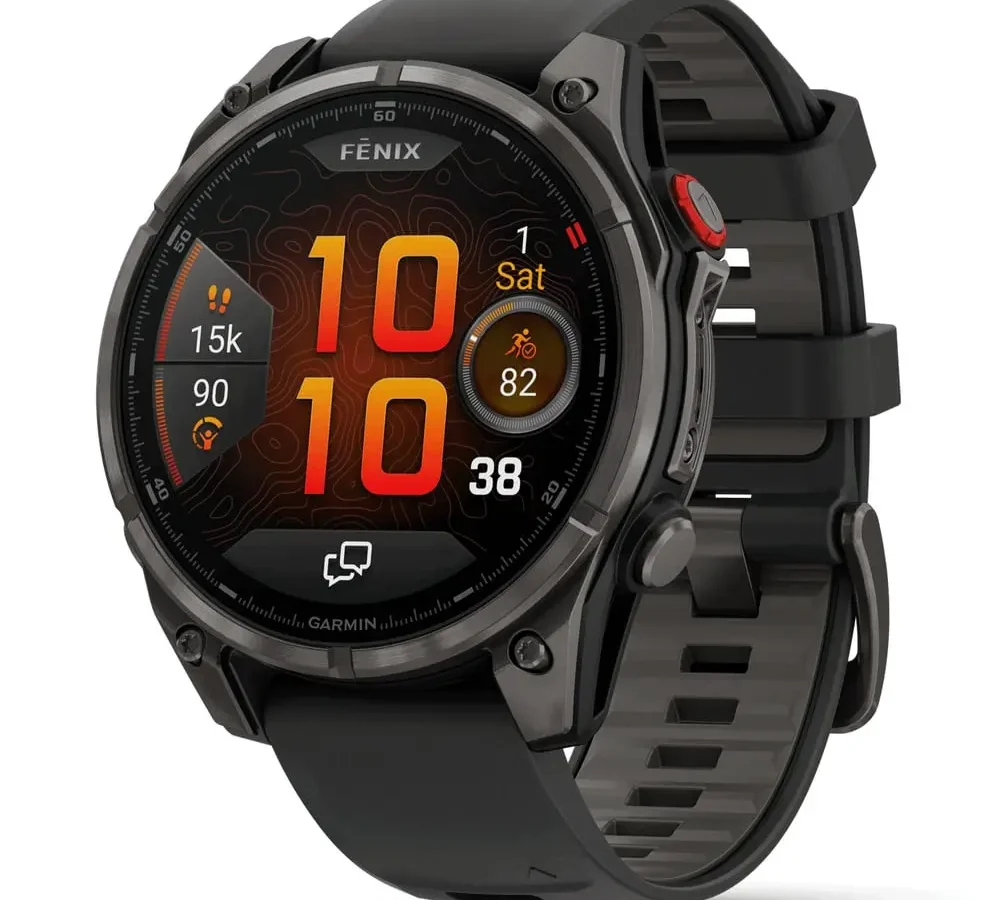
Garmin CEO Cliff Pemble dropped a hint during the Q4 2025 earnings call. He told analysts to expect “a very active year plan for outdoor” with most launches landing in the back half of 2026. The Fenix 8 arrived in August 2024. The Fenix 8 Pro followed in September 2025. Major Fenix generations have historically landed every 29 to 31 months. That math puts a Fenix 9 squarely in the H2 2026 window. Here is everything we know, expect, and hope to see from Garmin’s next flagship multisport watch.
What the Fenix 8 got right and where it fell short
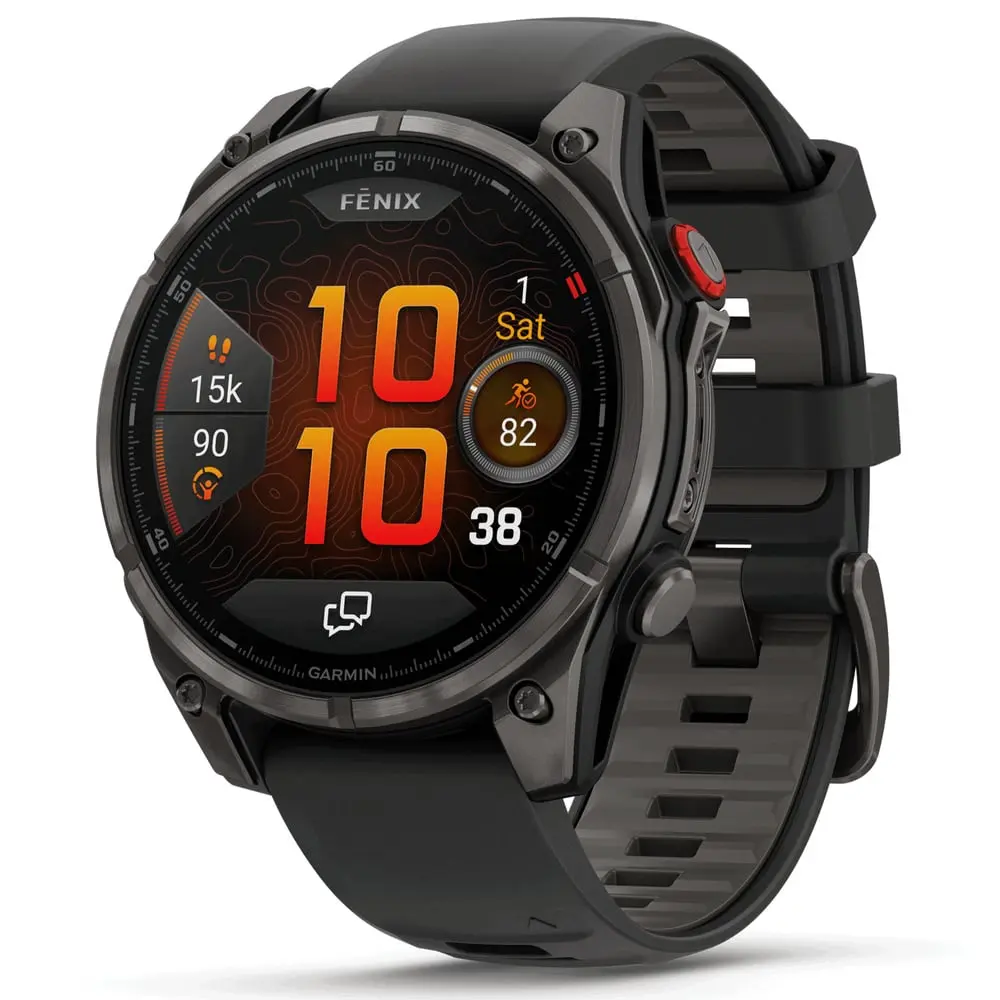
The Fenix 8 brought a sharp AMOLED display, a built-in speaker and microphone, a dive-ready 10 ATM rating, and the improved Elevate v5 heart rate sensor. Training readiness, HRV status, and the redesigned map interface all earned praise from runners, cyclists, and hikers who rely on Garmin daily. It was a genuine leap in hardware.
A common misconception is that the Fenix 8 dropped Solar and MIP entirely. It did not. Garmin launched both AMOLED models (43mm, 47mm, and 51mm) and Solar/MIP models (47mm and 51mm). What disappeared was the smaller Solar/MIP option. If you wanted the transflective, sunlight-readable display with solar charging, you had to go 47mm or bigger. For smaller-wristed athletes who loved the old Fenix 7S Solar, that was a dealbreaker. Garmin forums and Reddit threads made the frustration clear.
The other sticking point? Price. The Fenix 8 AMOLED starts at $999.99. The Solar/MIP variants start at $1,099.99. The 51mm titanium pushes past $1,299. That is a lot to ask when COROS and Suunto offer compelling alternatives at half the cost.
New features we expect from the Fenix 9
Garmin has not confirmed a single spec. No FCC filing clearly tied to a Fenix 9 has surfaced as of April 2026. But patent activity, competitor moves, and Garmin’s technology roadmap give us plenty to work with.
A new processor. The Fenix 8 runs on a custom Garmin chipset. The Fenix 9 will likely get a refined version with better power efficiency. Expect snappier map rendering, faster route calculation, and improved always-on display battery life. A March 2026 cluster of antenna-related patents (US 20260086505, US 20260088493, US 20260086506) hints at improved wireless and GNSS designs that could debut in new hardware.
Health sensors. Garmin has been busy filing patents. A February 2026 patent (US 20260033750) describes estimating glycated hemoglobin through pulse spectroscopy. That is blood sugar territory. An earlier filing (US 20250134464) covers pressure compensation for wrist-based pulse spectrometry, improving optical readings by accounting for how tightly the watch presses against skin. These are long-term plays. The most realistic near-term upgrade for the Fenix 9 is better optical heart rate accuracy and more refined temperature insights, not a fully mature blood glucose or blood pressure sensor.
Multi-band GPS refinements. Multi-band satellite support is already standard. The Fenix 9 should improve accuracy in urban canyons and dense tree cover while reducing the battery penalty. Garmin’s SatIQ technology will likely get a third-generation update that switches between single-band and multi-band more aggressively based on terrain.
A new input method? Patent US 20250341869 describes a magnetic rotary crown combined with a pushbutton assembly. Garmin’s five-button layout is iconic, but a digital crown could work alongside physical buttons for scrolling maps and menus. This one is low-confidence speculation, but worth watching.
Software. Expect tighter Garmin Coach integration, improved cycling dynamics, and possibly AI-powered training suggestions that adapt weekly plans based on recovery metrics. The map experience should also improve, with faster POI search and better trail routing.
The Solar and MIP question
Contrary to what many blogs reported, the Fenix 8 did not kill Solar/MIP. It just limited the lineup. The real question for the Fenix 9 is whether Garmin brings back a smaller Solar/MIP model or keeps the 47mm/51mm-only split.
Community demand for a smaller MIP option is loud and consistent. Garmin’s own forums have active threads from users who miss the small MIP display. These are hikers, mountaineers, and ultra runners who value sunlight readability and multi-day battery over vibrant animations.
The highest-probability outcome for the Fenix 9? AMOLED in 43mm, 47mm, and 51mm. Solar/MIP in 47mm and 51mm. Same structure as the Fenix 8. Garmin has shown no hard evidence of restoring a small MIP model, and cutting SKUs simplifies manufacturing and retail.
The wildcard is display technology. Patent-rumor coverage has linked Garmin to solar-over-display approaches that could bridge the AMOLED vs MIP gap. Reflective AMOLED panels from manufacturers like JDI combine sunlight readability with the color depth of OLED. If Garmin can source a panel that reads well outdoors without burning through the battery, they could offer solar charging on an AMOLED model. That would be a game-changer, but no leak confirms it for the Fenix 9.
If you want guaranteed solar and a transflective display in a lighter package, the Enduro line remains the safer bet.
How the Fenix 9 stacks up against the competition
The outdoor GPS watch market has never been more competitive. Here is how the expected Fenix 9 compares to its main rivals.
| Feature | Fenix 9 (expected) | Apple Watch Ultra 3 | COROS Vertix 3 | Suunto Race 2 |
|---|---|---|---|---|
| Display | AMOLED + MIP/Solar | AMOLED | AMOLED | AMOLED |
| Battery (GPS) | ~48h AMOLED / ~90h+ MIP | ~18 hours | ~85 hours | ~40 hours |
| Multi-band GPS | Yes (SatIQ v3) | Yes | Yes (dual freq) | Yes |
| Offline maps | Yes (TopoActive) | Yes (Apple Maps) | Yes (landscape) | Yes (outdoor) |
| Health sensors | HR, SpO2, temp, ECG? | HR, SpO2, temp, ECG | HR, SpO2 | HR, SpO2, temp |
| Water rating | 10 ATM | 10 ATM (EN 13319) | 10 ATM | 10 ATM |
| Solar option | Yes (MIP models) | No | No | No |
| Price (est.) | $999-$1,399 | $799-$899 | $599-$899 | $449-$549 |
The Fenix 9’s main edge remains its ecosystem. Garmin Connect, Garmin Coach, FirstBeat analytics, and deep integration with Edge cycling computers and power meters create a training platform no single competitor matches. Apple wins on smartwatch features. COROS wins on battery and price. Suunto wins on value. But Garmin ties it all together for serious multisport athletes, and it is the only brand offering both AMOLED and Solar/MIP in the same product family.
The pricing pressure is real. COROS has proven that premium GPS watches do not need to cost four figures. If Garmin holds the Fenix 9 at $999+ while COROS delivers 90% of the features at $599, the value argument gets harder to make with each generation.
When can you buy it and what will it cost?
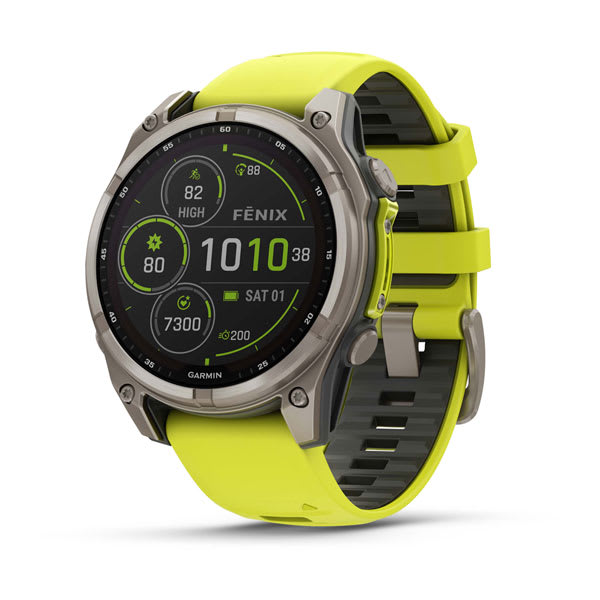
Based on Garmin’s release cadence and Pemble’s earnings call comments, expect the Fenix 9 announcement in August to October 2026. The Fenix 6 to Fenix 7 gap was about 29 months. The Fenix 7 to Fenix 8 gap was about 31 months. A late Q3 or early Q4 2026 launch fits that pattern. Garmin typically unveils new Fenix models at a dedicated press event, with pre-orders opening the same day and shipping within one to two weeks.
Pricing will likely hold steady. The Fenix 8 AMOLED starts at $999.99, and the Solar/MIP starts at $1,099.99. The Fenix 9 should match those entry points, with titanium and sapphire variants pushing $1,299 to $1,499. Garmin has avoided aggressive price hikes on the Fenix line, preferring to add features at each tier.
Expected sizes remain 43mm, 47mm, and 51mm for AMOLED, with 47mm and 51mm for Solar/MIP. Materials should include stainless steel, titanium with DLC coating, and sapphire crystal at the top end. A Fenix 9 Pro could follow in 2027, bringing more experimental features like advanced health sensors after the base hardware platform ships.
Bottom line: The Garmin Fenix 9 should land in late 2026 as an iterative but meaningful upgrade. A faster processor, refined health sensors, improved GPS accuracy, and better battery efficiency are near-certain. Solar/MIP will likely stay in the lineup but remain limited to larger case sizes. If you own a Fenix 7 or older, the Fenix 9 will be worth the wait. If you bought a Fenix 8, skip this one. And if you want the ultimate solar battery life in a lighter build, the Enduro line is where you should look.