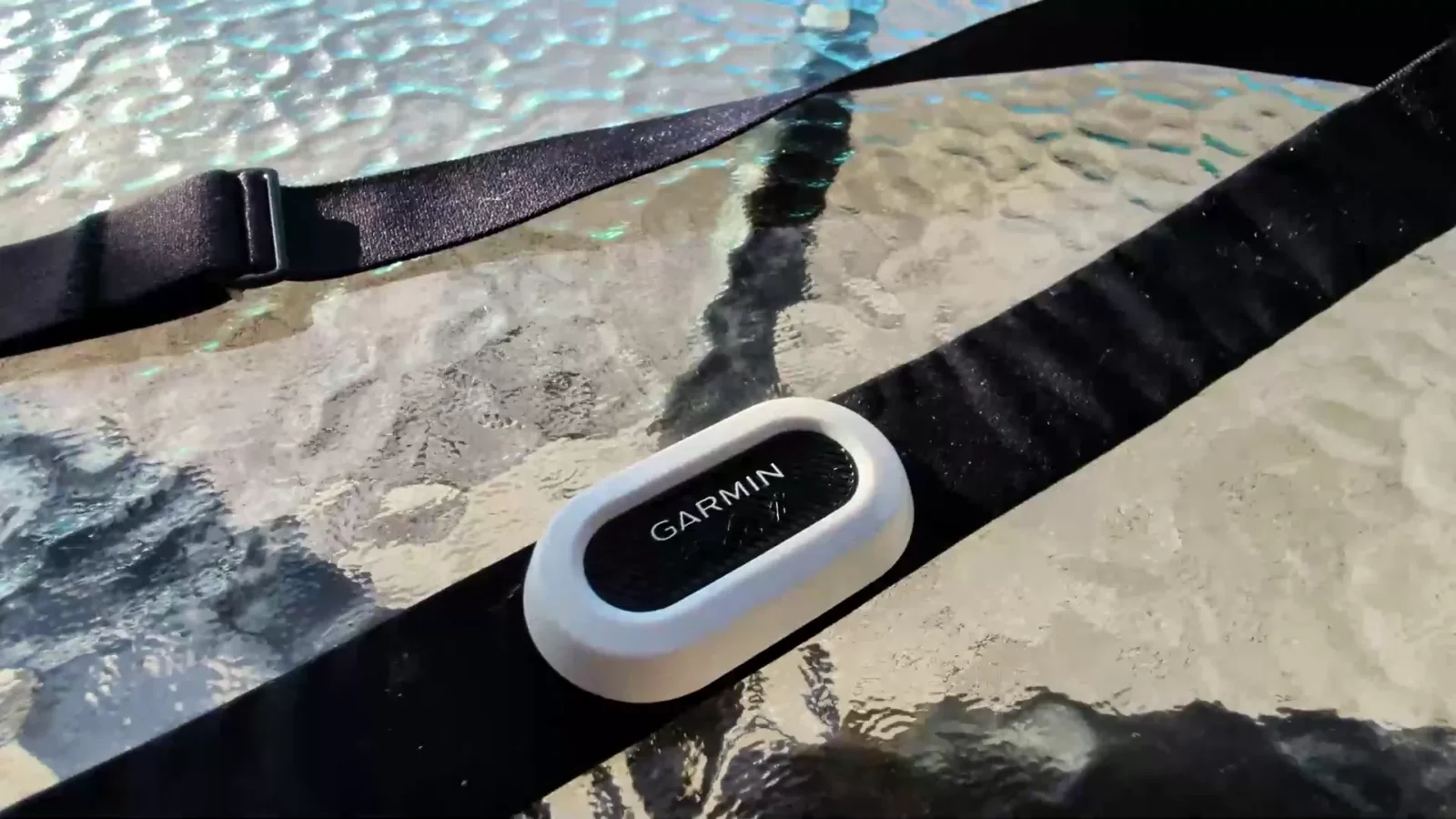
Garmin now sells three chest strap heart rate monitors. The HRM 200 starts at $79.99, the HRM-Pro Plus sits at $129.99, and the HRM 600 tops the lineup at $169.99. Each one targets a different kind of athlete. This guide breaks down the specs, features, and best use cases so you can pick the right one for your training.
How the three Garmin chest straps compare
Before we dig into the details, here is a side-by-side look at what matters most.
| Feature | HRM 200 | HRM-Pro Plus | HRM 600 |
|---|---|---|---|
| Price (USD) | $79.99 | $129.99 | $169.99 |
| Weight (with strap) | 63 g | 52 g | 61 g |
| Water resistance | 3 ATM | 5 ATM | 5 ATM |
| Battery | CR2032 (~1 year) | CR2032 (~1 year) | Rechargeable (~2 months) |
| Running dynamics | No | Yes | Yes |
| Running power | No | Yes | Yes |
| Swim store & forward | No | Yes | Yes |
| Standalone recording | No | No | Yes (18+ sports) |
| Detachable module | Yes | No | Yes |
| Secure Bluetooth | Yes | No | Yes |
All three models share the fundamentals: real-time heart rate, HRV data, ANT+ with unlimited connections, and Bluetooth LE with up to three simultaneous devices. The differences come down to training features, build design, and how independently the strap can work without a watch.
HRM 200: the budget pick for cyclists and gym-goers
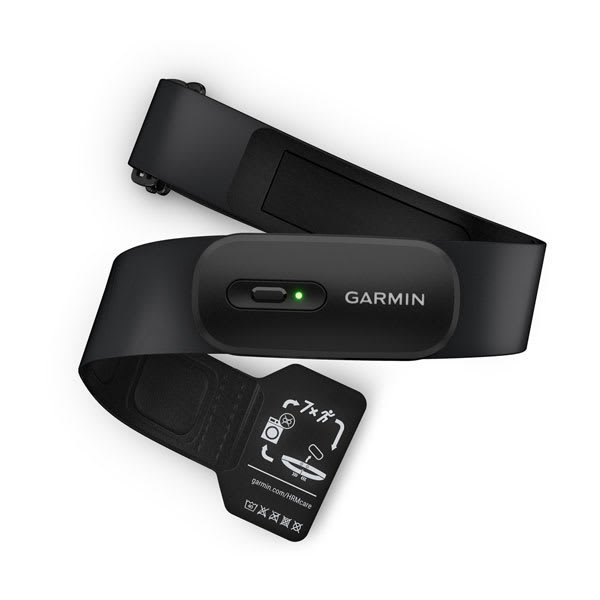
The HRM 200 does one thing well: it sends accurate heart rate and HRV data to your devices. No running metrics, no swim memory, no activity tracking on its own. Just clean, reliable pulse data over ANT+ and Bluetooth.
That simplicity is a strength. Cyclists who pair a chest strap with an Edge computer or a Zwift setup need nothing more. Same goes for gym sessions, yoga, or any indoor workout where heart rate zones guide your effort. The CR2032 coin cell battery lasts about a year at one hour per day, and you never have to worry about charging.
A few things set it apart from older Garmin straps. It supports Secure Bluetooth, which prevents other nearby devices from accidentally connecting to your strap. The module pops off the strap, so you can toss the strap in the washing machine. And it comes in two strap sizes (XS-S and M-XL) instead of forcing a one-size-fits-all approach.
The trade-off? Only 3 ATM water resistance, so it handles sweat and rain but is not rated for swimming. And you get no running dynamics, no indoor pace tracking, and no data storage. For many athletes, that is perfectly fine.
Best for: Cyclists, Zwift users, gym-goers, and anyone who just wants accurate heart rate without paying for features they will not use.
HRM-Pro Plus: built for runners and triathletes
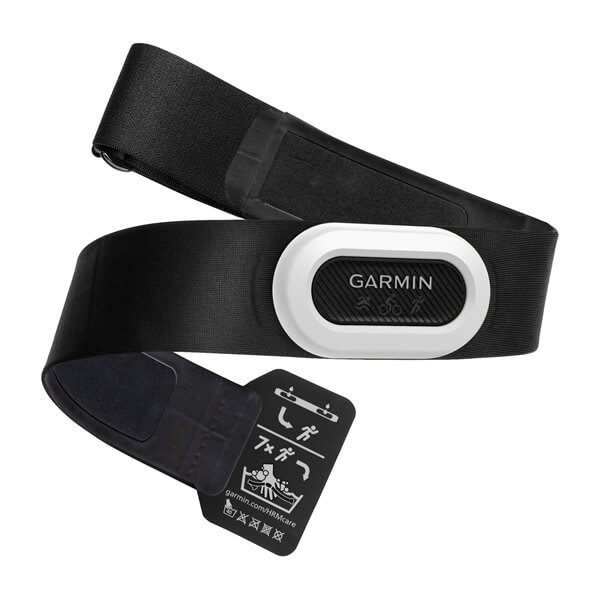
The HRM-Pro Plus adds a full suite of running metrics. Paired with a compatible Garmin watch, it tracks cadence, stride length, vertical oscillation, ground contact time, ground contact time balance, and vertical ratio. These six running dynamics metrics help you spot form issues and track improvements over time.
It also estimates running power directly from the chest strap and calculates indoor pace and distance for treadmill runs. Triathletes get Store & Forward for swimming: the strap records your heart rate underwater and sends it to your watch after you finish. Bluetooth does not travel through water, so this caching feature fills the gap.
Activity tracking works through Garmin’s TrueUp system. Wear the strap without a watch, and the data syncs to Garmin Connect the next time your watch connects. You get credit for steps, calories, and heart rate even when you leave the watch at home. But you do need a Garmin watch in the loop eventually.
The design has one compromise. The module is built into the strap, so you cannot remove it. That means hand washing only. The strap uses one adjustable size (63-106 cm, or up to 142 cm with the included extender) instead of separate XS-S and M-XL options. Water resistance jumps to 5 ATM, matching proper swim-ready standards.
Best for: Runners who want form data, triathletes who swim, and multi-sport athletes already in the Garmin ecosystem.
HRM 600: standalone tracking for serious athletes
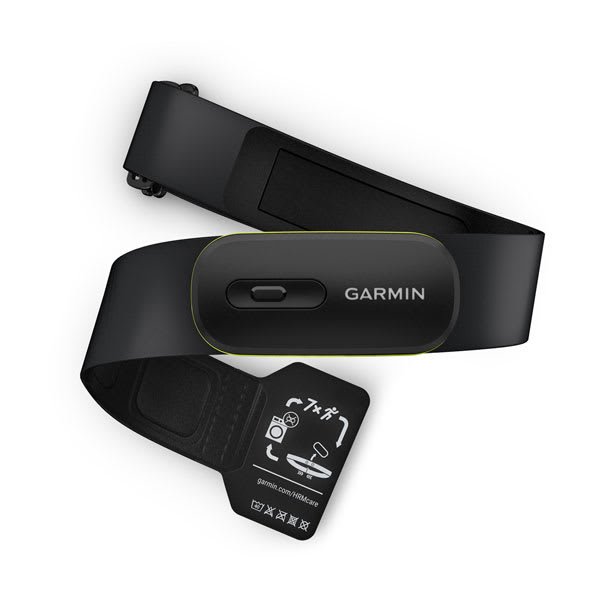
The HRM 600 is Garmin’s most capable chest strap. It does everything the HRM-Pro Plus does, then adds standalone activity recording, a rechargeable battery, and an exclusive running metric called Step Speed Loss.
Standalone recording is the headline feature. Open the Garmin Connect app on your phone, select an activity, tap start, and the HRM 600 records on its own for up to 24 hours per session. No watch required. It supports 18+ activity types including running, cycling, swimming, basketball, volleyball, ice hockey, field hockey, football/soccer, American football, lacrosse, rugby, ultimate disc, cricket, softball, baseball, MMA, boxing, and general cardio.
This makes it ideal for team sport athletes who cannot or do not want to wear a watch during play. Strap it on, start recording from your phone, and review heart rate, calories, speed, and distance afterward. The data syncs directly to Garmin Connect without needing a Garmin watch at all.
Step Speed Loss measures how much forward speed you lose during each ground contact phase. Lower numbers mean more efficient running form. Right now, this metric requires a compatible Garmin smartwatch like the Forerunner 970 and must connect via Secure Bluetooth (not ANT+). It feeds into Garmin’s broader Running Economy analysis.
The rechargeable lithium-ion battery lasts about two months at one hour per day and charges via a standard Garmin cable. The module is detachable, so the strap goes in the washing machine. A tri-color LED and physical button make pairing and mode switching straightforward. It also receives firmware updates over the air through the Garmin Connect app or a paired watch.
Best for: Team sport athletes, serious runners chasing form metrics, and anyone who wants full heart rate tracking without a watch.
Which one should you pick
The answer depends on what you train and how you train.
Pick the HRM 200 if you mainly cycle, use Zwift, or do gym workouts. You get accurate heart rate data at the lowest price. The long battery life and washable strap make it hassle-free. If you never run outdoors or swim with your strap, this is all you need.
Pick the HRM-Pro Plus if you run and want running dynamics on your Garmin watch. The running power, indoor pace tracking, and swim data storage add real value for runners and triathletes. At $50 more than the HRM 200, the extra metrics justify the price if you will actually use them.
Pick the HRM 600 if you play team sports, want to record activities without a watch, or chase every available running metric. The standalone recording is a game-changer for basketball, football, hockey, and other sports where a watch gets in the way. Step Speed Loss is a bonus for dedicated runners. At $169.99 it is the most expensive option, but it is also the only chest strap that works fully independently.
One practical note on batteries. The HRM 200 and HRM-Pro Plus use CR2032 coin cells that last about a year. The HRM 600’s rechargeable battery needs charging roughly every two months. If you hate charging yet another device, keep that in mind.
| You are… | Get this |
|---|---|
| A cyclist or Zwift user | HRM 200 ($79.99) |
| A runner who wants dynamics | HRM-Pro Plus ($129.99) |
| A triathlete | HRM-Pro Plus ($129.99) |
| A team sport athlete | HRM 600 ($169.99) |
| Training without a Garmin watch | HRM 600 ($169.99) |
| On a budget | HRM 200 ($79.99) |